
Affiliate Disclosure: EntrywayConsoleTable is reader-supported. When you buy through links on this site, we may earn a small commission at no extra cost to you.
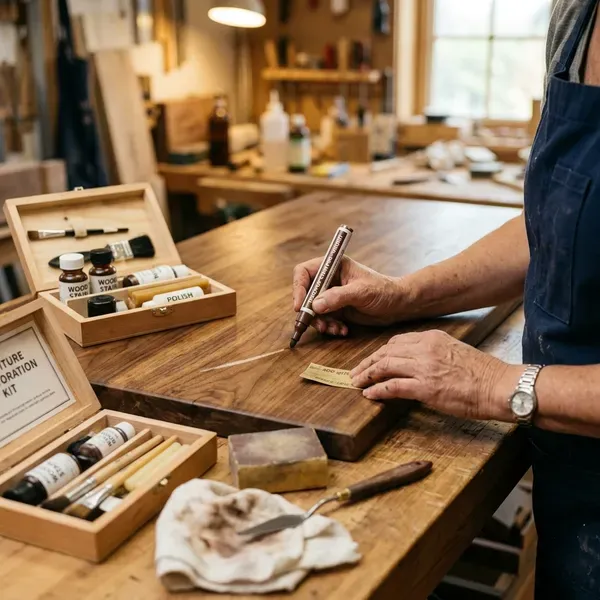
Most console table damage — wobbly legs, loose hardware, scratches, water rings — is fixable at home in under an hour with a screwdriver, wood glue, and 120-220 grit sandpaper. The most repairable consoles use cam-lock joints and accessible hardware you can tighten and replace. The Tribesigns 63” Farmhouse Console is our top pick for a build that stays stable and easy to service.
Quick Recommendations
These four flat-pack consoles are the ones we’d recommend keeping long-term — cam-lock builds with accessible hardware, replaceable parts, and leveling feet that turn a wobble into a 15-minute fix.
| Product | Best for | Depth | Storage | Price |
|---|---|---|---|---|
| Tribesigns 63” Farmhouse Console | Best overall | 11.8” | 1 open shelf + lower shelf | $90-140 |
| HOOBRO 29.5” Narrow Console | Best budget | 9.5” | 1 open shelf | $40-60 |
| Tajsoon 41.8” 2-Tier Industrial Console | Best cam-lock build | 11.5” | 1 open shelf (2-tier) | $50-80 |
| GiftGo 47.2” Vintage Narrow Sofa Table | Best for narrow halls | 11.8” | 1 open shelf | $70-100 |
Our #1 pick: the Tribesigns 63” Farmhouse Console — a cam-lock build with visible joints and reachable Phillips screws that stays stable for years and repairs in minutes when it doesn’t.
What Makes a Good Console Table for Easy Repair?
A good console table for repair is one you never need a specialist for. The most repairable builds share three traits: cam-lock joints you can re-torque with a hex key, screws that stay reachable after assembly, and panels that come apart without prying. All four tables here pass that test — each one can be tightened, leveled, and touched up in under an hour.
- Cam-lock joints: barrel locks at 2-4 points per panel re-tighten in minutes when a frame starts to rack
- Accessible hardware: Phillips and hex-key bolts on legs and aprons, never glued or buried fittings
- Materials: wood-grain MDF tops sand flat at 120-220 grit and touch up with markers; solid wood legs sand and re-stain
- Stability: four leveling feet cure uneven-floor wobble without shims, and X-braces like the Tajsoon’s add stiffness joints alone can’t
- Replaceable parts: standard shelf pins, drawer slides, and knob sizes that sellers stock individually
Most wobble complaints trace to three causes: loose cam-lock barrels, stripped screw holes, and uneven floors — all home fixes. A toothpick dipped in wood glue refills a stripped hole in five minutes, and adhesive furniture levelers permanently fix a short leg. Scratches follow a depth ladder: walnut meat for surface marks, touch-up markers for medium scratches, and wood filler sanded at 220 grit for gouges.
Best Console Tables for Easy Repair and Maintenance
1. Tribesigns 63” Farmhouse Console — Best Overall
Full specs: View the detail page for the Tribesigns 63” Farmhouse Console
Best for: Long entry walls where you want a stable, serviceable workhorse
Depth: 11.8”
Why we recommend it: The 63-inch frame uses cam-lock barrels on the apron with Phillips screws at every leg, and nothing is glued shut — re-torquing the four corner joints with a hex key takes about 10 minutes and kills the wobble. The wood-grain MDF top sands and touches up far better than raw particle board, and since this model is sold across multiple ASINs, replacement shelf pins and hardware are easy to source.
Pros:
- Cam-lock joints you can retighten with a standard hex key
- Phillips screws at every leg — no hidden or glued fittings
- 63” length with 11.8” depth fits the two-thirds-wall rule
- Water-resistant top cleans easily after any repair
Cons:
- Two people recommended for assembly (30-45 minutes)
- Open shelf means clutter needs baskets
Ideal room: Standard 90-100 inch entry walls, living-room consoles, and open-plan foyers.
2. HOOBRO 29.5” Narrow Console — Best Budget
Full specs: View the detail page for the HOOBRO 29.5” Narrow Console
Best for: Tight entryways and first-time buyers who want a $40-60 table that’s easy to keep upright
Depth: 9.5”
Why we recommend it: At 9.5 inches deep and 29.5 inches long, this is the least wobbly geometry of the four — short spans simply don’t rack under load the way long tables do. The build is simple flat-pack: cam-lock connectors and a single open shelf that lifts out for cleaning or repair. Hardware is standard-size, so knobs and barrel locks are trivially easy to replace when they wear.
Pros:
- Compact geometry resists racking naturally
- Tool-friendly cam-lock assembly (10-20 minutes solo)
- Standard-size hardware easy to source
- Low price means even a full scratch-out isn’t a disaster
Cons:
- Lighter frame — anchor to the wall in homes with kids or pets
- Single shelf limits storage; top takes light decor only
Ideal room: Narrow apartment entryways and hallways under 36 inches wide.
3. Tajsoon 41.8” 2-Tier Industrial Console — Best Cam-Lock Build
Full specs: View the detail page for the Tajsoon 41.8” 2-Tier Industrial Console
Best for: Industrial-style rooms where the X-frame does the stabilizing work
Depth: 11.5”
Why we recommend it: The metal X-frame is the repair-proof part here — cross braces carry the load, so the cam-lock joints barely work. The frame stays square through repeated tighten-and-loosen cycles, and the visible bolts mean you can see exactly what needs adjusting. The black powder-coat hides touch-up paint well, which makes this the easiest of the four to keep looking new after a fix.
Pros:
- X-frame adds stiffness that joints alone can’t
- Visible hardware means easy diagnosis and retightening
- Powder-coated metal hides touch-ups
- 2-tier layout with a removable shelf
Cons:
- Metal frame shows fingerprints more than wood
- 41.8” length suits mid-size walls only
Ideal room: Industrial, modern, and rental entryways on 60-80 inch walls.
4. GiftGo 47.2” Vintage Narrow Sofa Table — Best for Narrow Halls
Full specs: View the detail page for the GiftGo 47.2” Vintage Narrow Sofa Table
Best for: Hallways where a stable, vintage-look console must stay slim
Depth: 11.8”
Why we recommend it: The 47.2-inch length covers most hallway walls without overspanning, and the rustic finish is forgiving — scuffs on a distressed table read as character, not damage. Its flat-pack build mirrors the others with cam-lock connectors and leveling feet, but the wider 11.8-inch stance makes it steadier under lamps and trays than slimmer rivals, so it stays level longer between tightenings.
Pros:
- Distressed finish hides scuffs — repairs barely show
- Leveling feet included for uneven floors
- 47.2” length suits standard hall walls
- Cam-lock assembly with tool-free shelf removal
Cons:
- Deep gouges need touch-up markers, not just filler
- Mid-range price — budget buyers should look at HOOBRO
Ideal room: Hallways, bedrooms, and cozy entryways with 60-80 inch walls.
Buying Considerations
Depth
Depth of 9.5-11.8 inches keeps a 36-inch walkway clear and shortens the lever arm that makes tables wobble — a 9.5-inch-deep table racks visibly less under load than a 13.6-inch one. Shallower models like the HOOBRO are also easier to tip-check and anchor in tight spaces. Deeper tables only earn their footprint in wide foyers.
Width
Follow the two-thirds rule: the table should span roughly two-thirds of its wall. Width also affects repair frequency — a 29.5-inch table stays rigid under load that racks a 63-inch frame, so smaller spans need less frequent tightening. If you need a long table, plan on a yearly cam-lock and screw check.
Height
Most models run 29.5-31.5 inches tall, and the leg-attachment style matters more than the exact height for repairs. Bolt-on legs with accessible screws are the easiest to level and re-tighten; glued or doweled legs force full disassembly. Check that your table sits level before you add weight — a 30-inch console that tilts will loosen joints faster.
Storage
Open shelves on cam-lock builds lift out for cleaning and repair, which is a big advantage over drawer models. If you want drawers, buy standard-size slides you can adjust with a screwdriver — sticky drawers usually respond to candle wax on runners, and broken bottoms replace with quarter-inch plywood. Shelves with standard pins are the most replaceable parts on any console.
Materials
Wood-grain MDF tops sand flat at 120-220 grit and touch up with furniture markers, making them the cheapest surfaces to repair. Veneer demands colored wax sticks — never sand it or you’ll expose the sub-layer. Metal frames (like the Tajsoon’s) develop rust spots that a wire brush and rust converter fix cleanly, and solid wood legs glue and clamp back together on clean breaks. Avoid bare particle board, which swells irreversibly when wet — our materials and maintenance guide compares the options.
Stability
Look for X-bracing, metal frames, or reinforced corners plus leveling feet for uneven floors. Re-torqueing cam-lock barrels with a hex key fixes most new-table wobbles in minutes, and a toothpick-and-glue refill resurrects stripped screw holes. Anchor any table over 30 inches tall in homes with kids or pets — our anti-tip wall-anchoring guide covers the hardware.
Style
Classic silhouettes with clean lines stay in production longer, which means replacement parts and matching finishes remain available. Distressed and vintage finishes like the GiftGo’s hide scuffs and minor repairs, while gloss finishes show every touch-up. If you dislike visible repairs, choose matte or textured surfaces over shiny ones.
FAQ
How do I fix a wobbly console table?
Start by tightening all screws, bolts, and cam-lock barrels. If the table still wobbles, place it on a level surface, identify the short legs, and install adhesive furniture levelers. For loose corner joints, apply wood glue and clamp for 24 hours. Severely loose joints may need disassembly and regluing with fresh adhesive.
Can I fix a scratched console table myself?
Most scratches are fixable at home. Light surface scratches respond to walnut meat or wax repair sticks. Medium scratches need furniture touch-up markers and clear wax. Deep gouges require wood filler, sanding, and refinishing. Never sand veneer — use colored wax sticks instead, or you’ll expose the sub-layer beneath.
How do I repair water-damaged wood on a console table?
For white water rings, apply mayonnaise or toothpaste, let it sit 10 minutes, then wipe clean. For dark stains, sand with 120-grit then 220-grit, apply wood bleach if needed, and refinish. Swollen particle board cannot be restored — that damaged section needs replacement.
Can I fix a broken leg on my console table?
Clean breaks repair with wood glue and clamping. Splintered breaks need reinforcement with dowels or metal brackets. Severe damage requires full leg replacement. Assess whether the repair will hold weight safely before you commit.
How do I fix a separated top joint on my console table?
Pry the gap open slightly, inject wood glue with a syringe, clamp across the width using cauls to distribute pressure evenly, clean excess glue with a damp cloth, and clamp for 24 hours. This works for butcher-block and paneled tops that separate at glue lines.
When should I replace instead of repair my console table?
Replace when you see swollen particle board, warped tops, broken glass, extensive veneer damage, structural rot, or a style outdated beyond recognition. Most scratches, loose joints, water rings, and minor veneer damage are worth repairing.
What tools do I need for basic console table repair?
A screwdriver set, wood glue like Titebond II or III, clamps, 120-220 grit sandpaper, a putty knife, utility knife, and measuring tape. Materials include wood filler, wax repair sticks, furniture markers, wood stain, and polyurethane to seal repairs.
How do I prevent future damage to my console table?
Use felt pads under decorative items, clean spills immediately, keep the table away from direct heat, use coasters, dust with a soft cloth, and check and tighten hardware at least once per year. For the daily-care side, see our console table care guide.
Final Recommendation
If you want a console that stays stable and repairs easily, buy the Tribesigns 63” Farmhouse Console — cam-lock joints and reachable screws make wobbles a 10-minute fix, and the 63-inch surface fits most entry walls. Budget buyers should start with the HOOBRO 29.5”, and narrow halls should reach for the GiftGo 47.2”.
Related Guides
- Console table care guide — Prevent the damage in the first place
- Console table materials and maintenance — Which surfaces scratch, stain, or warp
- How to secure a console table to the wall — Anchor tall consoles safely
🔥 Today's Best Console Table Deals
Hand-picked discounted picks from AliExpress — prices change often, check the live price.
 -69%⚡ Lowest Price
 -64%
-64% -63%🔥 Best Deal