
Affiliate Disclosure: EntrywayConsoleTable is reader-supported. When you buy through links on this site, we may earn a small commission at no extra cost to you.
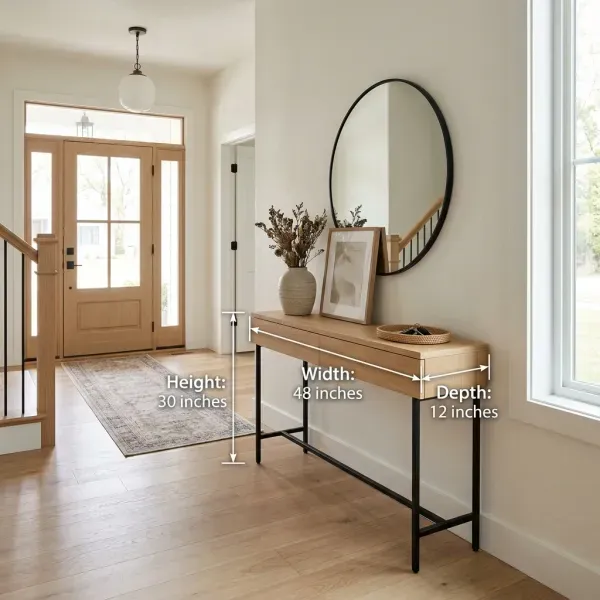
A console table is one of the most versatile, high-impact pieces of furniture in any home. Designed with a slim, wall-hugging profile, it delivers practical surface area, essential entryway organization, and elevated architectural styling without consuming valuable floor space.
Whether you are sizing a table for a narrow 36-inch hallway, anchoring the space behind a sectional sofa, or creating a dedicated drop zone, getting the dimensions, placement, and proportions right makes all the difference. This comprehensive guide covers exact height and length formulas, room-by-room placement strategies, functional utility ideas, and the top design styles.
Quick Reference: Standard Dimensions
| Dimension | Standard Range | Tight Spaces | Large Foyers / Sofas |
|---|---|---|---|
| Height | 30” � 32” | 29.5” � 30” | 32” � 34” |
| Depth | 10” � 14” | 6” � 9.5” | 14” � 18” |
| Length | 40” � 48” | 24” � 36” | 55” � 72”+ |
| Walkway Clearance | 36” minimum | 30” � 32” (absolute min) | 42”+ |
Console Table Heights and Lengths
Selecting the correct console table begins with understanding standard architectural proportions. A table that is too tall blocks natural sightlines, while one that is too deep obstructs vital walkway clearance.
+-------------------------------------------------------------+
|                                                             |
|                    WALL ART / MIRROR                        |
|                 (Centered above console)                    |
|                                                             |
+-------------------------------------------------------------+
               | 4" - 8" Gap |
+-------------------------------------------------------------+
|  [Vase/Lamp]          [Catch-All Tray]          [Books/Bowl] |
|=============================================================|  <-- TOP SURFACE (30" - 32" Standard Height)
|  [ Drawer ]                  [ Drawer ]                     |
|-------------------------------------------------------------|
|                                                             |
|                                                             |
|=============================================================|  <-- LOWER SHELF (Storage Baskets / Shoes)
|      |                                               |      |
|     ===                                             ===     |  <-- Leveling Feet (Prevents Wobble)
+-------------------------------------------------------------+
|<-------------------- Length: 39" - 63" -------------------->|
1. Standard Height Guidelines (30” to 32”)
- Standard Counter-Height (30”�32”): The overwhelming majority of modern console tables stand at 30 to 32 inches tall. This counter-height standard aligns naturally with door handles, wall switch heights, and comfortable leaning reach.
- Behind-the-Sofa Height Rule: When placing a table behind a couch, the table must sit 1 to 2 inches below the top of the sofa back cushions. It should never peek above the sofa frame.
- Proportion to Mirrors & Art: The bottom frame of a hanging mirror or wall art piece should sit 4 to 8 inches above the table surface to establish a cohesive visual unit.
2. Standard Length Guidelines
- The Two-Thirds Rule: A console table should span approximately two-thirds (60% to 70%) of the available wall segment. A 40-inch table suits a 60-inch wall, while an 80-inch wall easily accommodates a 55-inch to 63-inch console.
- Compact / Narrow Lengths (24” to 36”): Ideal for apartment vestibules, powder room entries, and recessed alcoves.
- Mid-Size Standard Lengths (39” to 48”): The sweet spot for standard residential hallways and medium entryways.
- Extra-Long Formats (55” to 78”+): Designed for grand double-height foyers, large open-plan living rooms, and long sectional sofas.
3. Depth & Walkway Clearance
- Hallways: Keep depth between 9.5 and 11.8 inches to protect the standard 36-inch clearance rule required for comfortable residential traffic.
- Ultra-Slim Profiles: Models measuring 5.7 to 8 inches deep provide key drop surfaces in the tightest corridors without ever clipping elbows or bags.
Where To Place Console Tables
While console tables were historically confined to grand 18th-century French entryways (consoles), their shallow depth makes them indispensable across every room of the modern home.
                  +--------------------------+
                  |  ROOM PLACEMENT MATRIX   |
                  +-------------+------------+
                                |
       +------------------------+------------------------+
       |                        |                        |
+--------------+        +---------------+        +---------------+
|   ENTRYWAY   |        |  LIVING ROOM  |        |  DINING ROOM  |
| - Key drop   |        | - Behind sofa |        | - Buffet/bar  |
| - Mail tray  |        | - Accent wall |        | - Dessert tray|
| - Shoe shelf |        | - Room zoning |        | - Extra linens|
+--------------+        +---------------+        +---------------+
       |                        |                        |
+--------------+        +---------------+        +---------------+
|  HOME OFFICE |        |    BEDROOM    |        | STAIR LANDING |
| - Laptop hub |        | - Vanity desk |        | - Art focal pt|
| - Printer stn|        | - Bed foot hub|        | - Soft lamp   |
+--------------+        +---------------+        +---------------+
Entryways:
The entryway is the natural habitat for a console table. Positioned adjacent to the front door, it creates an immediate arrival zone:
- Drop Zone Function: Acts as the designated landing pad for daily carry items: keys, sunglasses, wallets, and mail.
- Vertical Integration: Pairs seamlessly with a wall mirror for last-minute appearance checks before heading out the door.
- Base Storage: Lower tiers hold woven baskets to conceal pet leashes, gloves, hats, and everyday shoes.
Living Rooms:
- Behind the Sofa: Positioned against a floating sofa, a console table grounds the seating group, holds reading lamps, and provides hidden cup-and-remote surfaces.
- Accent Walls: Anchors long bare walls beneath large canvases or wall-mounted flat screens.
- Room Zoning: Demarcates functional zones in open-concept living/dining layouts without erecting visual walls.
Dining Rooms:
- Narrow Buffet Alternative: In dining rooms too narrow for a traditional 20-inch sideboard, a 12-inch console table functions as a stylish serving station.
- Bar Cart Extension: Holds drinkware, wine bottles, decanters, and cocktail accessories during dinner parties.
- Table Linen Storage: Models with shallow drawers store placemats, cloth napkins, and silverware organizers.
Home Offices:
- Secondary Workspace: Acts as a slim laptop touchdown station or standing desk for quick administrative tasks.
- Equipment Hub: Houses wireless printers, shredders, scanners, and external hard drives off your primary desk.
- Reference Library: Holds reference books, file organizers, and stationery supplies in shallow fabric bins.
Bedrooms:
- Dressing Vanity: Positioned beneath a vanity mirror and paired with a backless stool, a slim console creates a compact makeup and perfume station.
- Foot of the Bed: Low-profile consoles (under 30” tall) placed at the foot of the bed hold folded throws, decorative pillows, and books.
- Media Credenza: Supports small bedroom televisions and cable management boxes without stealing walkway space around the bed.
What Are Console Tables Used For?
The genius of the console table lies in its dual identity: half functional storage workhorse, half expressive design showcase.
       +---------------------------------------------------+
       |            CORE FUNCTIONALITY SPECTRUM            |
       +---------------------------------------------------+
                                 |
      +-----------------+--------+--------+-----------------+
      |                 |                 |                 |
+------------+   +------------+    +------------+    +------------+
|  STORAGE   |   |  DISPLAY   |    | WORKSPACE  |    |  DIVIDER   |
| - Drawers  |   | - Rule of 3|    | - Charging |    | - Open plan|
| - Baskets  |   | - Lighting |    | - Laptops  |    | - Sightline|
| - Shelves  |   | - Mirrors  |    | - Bills/pad|    | - Flow path|
+------------+   +------------+    +------------+    +------------+
Storage:
- Drawer Organization: Shallow drawers conceal loose pocket clutter, charging cables, extra keys, and incoming correspondence.
- Open Lower Shelving: Tiered shelving maximizes vertical capacity, accommodating fabric storage bins or shoe baskets.
- Cabinet Doors: Enclosed console designs keep footwear and sports gear completely out of sight.
Display:
- The Designer “Rule of Three”: Style the tabletop with three varying heights:
- Tall Component: A slim buffet lamp, tall sculptural vase, or oversized branch arrangement.
- Mid-Level Element: A framed family photo, small art print, or decorative sculpture.
- Low Functional Anchor: A brass catch-all tray, ceramic bowl, or stacked hardbound coffee table books.
- Symmetry vs. Asymmetry: Symmetrical styling (flanking paired lamps) conveys formal elegance; asymmetrical arrangements (a lamp on the left balanced by a book stack and vase on the right) yield a relaxed, modern feel.
Workspace Extension:
- Integrated Power Outlets: Contemporary console models incorporate built-in AC outlets and USB/Type-C ports right into the top surface.
- Drop Desk: Serves as a 15-minute workstation for checking email, signing permission slips, or organizing weekly mail.
Room Divider:
- Open-Plan Zoning: Separates the living room lounge from the dining or kitchen area while maintaining uninterrupted natural light and open sightlines.
Console Table Types & Design Styles
Matching the table’s material and silhouette to your home’s architectural language ensures an intentional, elevated interior.
+-------------------------------------------------------------------+
|                     POPULAR CONSOLE TABLE STYLES                  |
+-------------------------------------------------------------------+
|  1. Traditional Wooden  --> Turned legs, rich walnut/oak, molding |
|  2. Scandi / Minimalist --> Light ash/birch, clean lines, tapered |
|  3. Industrial          --> Matte black steel frame, rustic wood  |
|  4. Modern Glass        --> Brass/chrome, tempered glass, airy    |
|  5. Rustic Farmhouse    --> X-braces, distressed wood, warm tones |
|  6. Contemporary        --> Fluted details, curves, mixed media   |
+-------------------------------------------------------------------+
Traditional Wooden Console Tables:
- Hallmarks: Rich oak, cherry, or walnut finishes; classic turned legs; fluted molding; solid brass pull hardware.
- Best Paired With: Formal entryways, wainscoting, traditional molding, and classic hardwood floors.
- Strengths: Heirloom durability, high scratch resistance, and timeless elegance.
Scandi/Minimalist Console Tables:
- Hallmarks: Light blonde woods (ash, birch, white oak), tapered round legs, handleless push-to-open drawers, and zero visual clutter.
- Best Paired With: Bright, airy apartments, neutral color schemes, and minimalist Scandinavian decor.
- Strengths: Visual lightness that makes cramped entryways feel spacious and serene.
Industrial Console Tables:
- Hallmarks: Powder-coated matte black steel frames, reclaimed wood tops, exposed rivet details, and X-frame cross-bracing.
- Best Paired With: Urban lofts, exposed brick walls, modern farmhouses, and high-traffic family hallways.
- Strengths: Exceptional weight capacity (often 100+ lbs), supreme stability, and scratch-resistant surfaces.
Modern Glass Console Tables:
- Hallmarks: Tempered glass tops paired with polished chrome, brass, or blackened metal minimalist frames.
- Best Paired With: Small entryways, dark hallways with limited natural light, and glam or modern luxury spaces.
- Strengths: Zero visual mass; lets wall patterns and rugs show through while reflecting available light.
Rustic Console Tables:
- Hallmarks: Distressed timber textures, chunky plank construction, warm honey and espresso tones, and farmhouse crossbeams.
- Best Paired With: Suburban family homes, country cottages, and cozy, textured mudrooms.
- Strengths: Natural distressing naturally conceals daily scuffs, dings, and key drops.
Contemporary Console Tables:
- Hallmarks: Curved pill-shaped tops, fluted tambour detailing, asymmetrical pedestals, and mixed stone-and-metal finishes.
- Best Paired With: Architectural modern homes, curated transitional interiors, and statement focal walls.
- Strengths: Functions as an artistic centerpiece in addition to practical utility.
Are Console Tables Still In Style?
Yes, console tables remain an essential design staple. While ornate, oversized hallway consoles of past decades have evolved, the need for a slim, functional drop surface has never been higher.
In 2026, interior design trends highlight three key console evolutions:
- Curved & Fluted Silhouettes: Soft, rounded edges and ribbed tambour facades soften straight hallway corridors and prevent bruised hips.
- Smart Tech Integration: Built-in hidden charging strips, cable passthroughs, and wireless charging pads make consoles the technological command center of the entryway.
- Multi-Functional Minimalism: Consumers increasingly demand tables that double as study nooks, buffet servers, or room dividers.
Shop the Look: Top Recommended Models
Here are our top-rated console table picks evaluated for build quality, dimension accuracy, stability, and everyday value:
| Model | Style | Dimensions (L x D x H) | Key Feature | Price Range |
|---|---|---|---|---|
| HOOBRO 29.5” Narrow | Industrial / Slim | 29.5” x 9.4” x 29.5” | Fits 36” hallways; 1 bottom shelf | $40 � $60 |
| Hoctieon 31.5” Curved | Modern Curved | 31.5” x 11.8” x 31.5” | 3-tier curved shelves; child-friendly | $60 � $90 |
| HOOBRO 2-Drawer Console | Modern Farmhouse | 29.5” x 9.4” x 31.5” | 2 fabric drawers + key shelf | $55 � $75 |
| Tajsoon 41.8” Gold Console | Modern Glam | 41.8” x 11.5” x 31.5” | Faux marble + gold frame | $60 � $90 |
| Tribesigns 63” Long Console | Rustic Industrial | 63.0” x 11.8” x 31.5” | Extra-long format; 150 lb capacity | $90 � $140 |
Top Overall Value: HOOBRO 29.5” Narrow Entryway Console
Designed specifically for tight foyers and 36-inch hallways, this 9.4-inch-deep workhorse keeps the walking path wide open while giving you a rock-solid top drop zone and a lower basket shelf.
Best Modern Curved Pick: Hoctieon 31.5” 3-Tier Console
Featuring smooth rounded corners and three tiers of storage, the Hoctieon eliminates sharp corner hazards in tight doorways while maximizing decorative display capacity.
Final Verdict & Buying Checklist
Before clicking purchase on your new console table, verify these final four checkpoints:
- Wall Clearance: Measure your hallway width and subtract table depth�ensure at least 36 inches remains clear.
- Height Check: If placing behind a couch, confirm table height is 1 to 2 inches below the sofa cushion line.
- Storage Fit: Decide whether your daily routine requires hidden drawers for keys or open shelving for woven storage baskets.
- Wall Anchoring: Always secure tall or ultra-slim console tables to wall studs using the included anti-tip kit for child and pet safety.
🔥 Today's Best Console Table Deals
Hand-picked discounted picks from AliExpress — prices change often, check the live price.
 -47%
-47% -46%
-46% -37%
-37%