
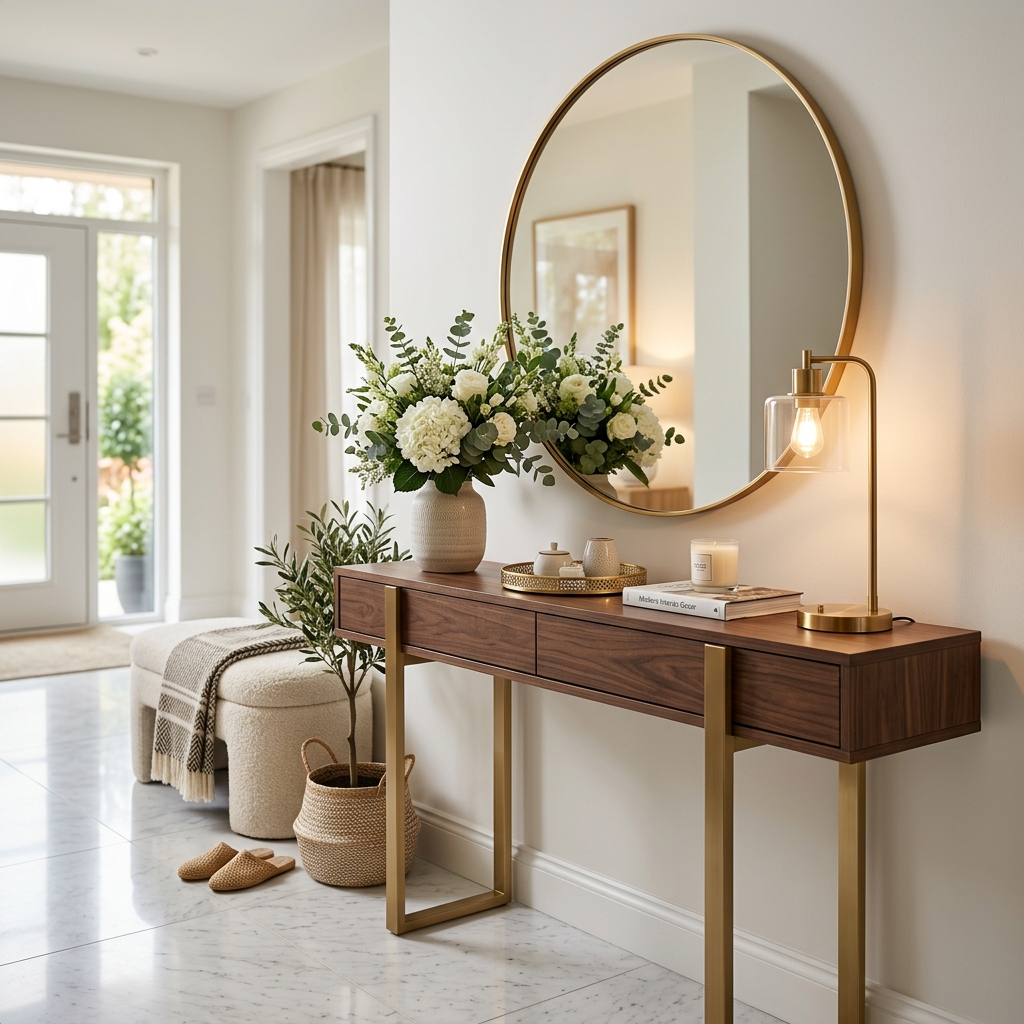
Affiliate Disclosure: EntrywayConsoleTable is reader-supported. When you buy through links on this site, we may earn a small commission at no extra cost to you.
An entryway without drawer storage becomes a drop zone in three days. Keys migrate to the kitchen counter, mail piles on the stairs, and sunglasses disappear exactly when you are late. A console table with drawers solves this by giving every small essential a closed, assigned home right where you enter.
Quick answer: The best console tables with drawers for entryway organization are 48-60 inches wide, 12-16 inches deep, with 2-4 drawers that are 2.5-4 inches tall inside. Choose full-extension ball-bearing slides, add drawer dividers for keys and mail, and keep one drawer empty as overflow — you will keep your tabletop clear and find essentials in under 10 seconds.
Key Takeaways
- Choose 48-60” wide with 2-4 drawers for family entryways; 30-42” with 1-2 drawers for apartments and narrow halls.
- Prioritize hidden storage console designs with full-extension slides and 10-13” usable drawer depth.
- Assign zones: Drawer 1 for keys and wallets, Drawer 2 for mail and action items, Drawer 3 for tech and seasonal gear.
- Use 12” drawer organizers, felt liners, and labels to maintain systems long-term.
- Pair drawer consoles with hooks, baskets underneath, and a tray on top for complete entryway storage.
Why Drawers Beat Open Surfaces for Entryways
Open console tables look airy, but they force you to stare at clutter. Drawers hide visual noise while keeping function. That matters in an entryway because this is a high-traffic, high-decision space — you need to grab and go, not sort and style.
Practical console designs with drawers reduce what designers call friction points. Instead of five micro-decisions — where are my keys, where is that bill, where is lip balm — you open one drawer. Families with kids see the biggest gain: a single top drawer with divided compartments can hold four sets of keys, two wallets, school passes, and earbuds without mixing.
For small spaces, drawers add storage without footprint. A 12-inch-deep practical console adds 1.5-2 cubic feet of hidden storage across two drawers, equivalent to three large decorative boxes but far easier to access.
Ideal Storage Dimensions Explained
Do not shop by exterior size alone. Ask for interior drawer measurements:
- Small entry / apartment: 30-42” W x 10-12” D x 30-32” H, 1-2 drawers, each 12-20” wide inside
- Standard foyer: 48-58” W x 14-16” D x 32-34” H, 2-3 drawers, each 20-26” wide inside
- Large / family mud entry: 60-72” W x 15-18” D x 32-36” H, 3-4 drawers plus lower shelf
Drawer interior height matters more than you think. Shallow 2-inch drawers are perfect for keys and flat mail. Medium 3-4 inch drawers handle sunglasses cases, chargers, gloves, and dog leashes. Anything over 5 inches wastes space unless you store scarves or umbrellas.
Check slide type. Full-extension ball-bearing slides let you reach the back 3 inches where keys hide. Bottom-mount wood glides stick over time. If you open drawers 15 times daily, invest in metal slides rated for 50,000+ cycles.
Best Drawer Configurations by Use Case
1. The Two-Drawer Classic for Couples and Small Families
Two wide drawers across a 48-52 inch console is the most versatile setup. Left drawer: personal grab-and-go — keys, wallets, badges. Right drawer: household inflow — mail, coupons, spare batteries, tape measure.
Use bamboo expandable dividers cut to 12-14 inches deep. Add a small 4x6 tray inset for keys so they do not slide. Line with washable felt to silence metal.
This layout keeps the top free for a lamp, bowl, and mirror. Ideal depth is 14-15 inches — deep enough for letter trays, shallow enough for 36-44 inch hallways with 30+ inches of walkway left.
2. Three to Four Drawers for Sorted Households
If you sort naturally, choose three or four smaller drawers:
- Top left: keys and fobs with labeled hooks inside
- Top right: daily carry — sunglasses, earbuds, hand sanitizer
- Bottom left: mail action file — to-pay, to-file, to-send
- Bottom right: seasonal — gloves, hats, sunscreen, pet waste bags
A 60-inch console with four 13-inch-wide drawers fits this perfectly. Look for center dividers and removable boxes you can lift out and carry to the kitchen when processing mail.
3. Single Drawer + Open Shelf Combo
For minimalist entryways, one long drawer plus a lower shelf balances hidden and open storage. The drawer hides the messy essentials; the shelf holds baskets for shoes, totes, or throws.
This is ideal for 10-12 inch narrow consoles where deep drawers are impossible. The single drawer at 2.5 inches tall still swallows keys and mail, while two woven baskets below add 1 cubic foot of forgiving storage.
Comparison: Drawer Console Types
| Type | Best For | Typical Size | Storage Capacity | Price Range |
|---|---|---|---|---|
| 2-drawer wide console | Couples, standard foyers | 48-52”W x 14-16”D | 1.5-2.0 cu ft hidden | $120-$280 |
| 3-4 drawer sorted console | Families, shared entries | 58-64”W x 15-18”D | 2.0-3.0 cu ft hidden | $180-$420 |
| 1-drawer + shelf combo | Narrow halls, minimalists | 36-48”W x 10-12”D | 0.8-1.2 cu ft + baskets | $80-$200 |
| Drawer + cabinet base | Max hidden clutter | 60”W x 16-18”D | 3.0-4.5 cu ft total | $250-$550 |
If you need display plus hidden function, explore console tables with shelves to pair open styling with drawer utility. For total entryway systems, see console table storage solutions.
How to Organize Console Drawers That Stay Organized
Start empty. Pull everything out, wipe, and measure interiors. Buy organizers after measuring — most returns happen because 14-inch organizers were forced into 11-inch drawers.
Use this zone formula:
Top drawer = Out-the-door in 30 seconds. Key hooks or magnetic strip on drawer side, wallet slot, badge clip, lip balm, mints. Nothing else. If it does not leave the house daily, it does not live here.
Middle drawer = Paper triage. Three vertical file sorters or stacked letter trays: Action This Week, File, Outgoing. Process weekly on trash day. Keep stamps, return labels, and a pen attached with adhesive holder.
Bottom drawer = Support. Chargers in a cord box, spare house keys in labeled envelopes, flashlight, umbrella sleeve, pet leash backup.
Label the inside front edge with a label maker. It sounds fussy, but households with teens or roommates maintain systems twice as long when zones are named. Add a small empty “inbox” corner — 4x4 inches — for the odd item without a home so it does not colonize the whole drawer.
For more ideas on baskets, trays, and hooks that complement drawers, browse console table organization hacks and our guide to best console tables with storage.
Styling Around Drawers Without Losing Function
Drawers free your tabletop, so style with intention. Keep 60% clear for drop-and-go. Use a shallow catch-all bowl for the one or two items that must stay visible. Anchor with a mirror or art 6-8 inches above, a table lamp on one side for 2700K evening visibility, and a vertical element like branches on the other.
Leave knee clearance if you tuck a stool or shoe bench below — 24 inches high minimum. If your console is 12 inches deep, choose decor under 8 inches deep to prevent tipping when drawers open.
Drawer pulls matter. Bar pulls suit modern entries and are easy with full hands. Knobs suit traditional spaces but snag bags. For narrow halls, choose flush or recessed pulls to save 1-2 inches of walkway.
Common Mistakes to Avoid
- Buying drawers too shallow for organizers. Anything under 9 inches usable depth will not fit standard trays. Measure inside, not outside.
- Choosing no-slide or wood-glide drawers for heavy use. They stick in humidity and fail in a year of entryway traffic. Insist on ball-bearing metal slides.
- Overfilling every drawer on day one. Leave 20% empty. Entryways accrue — permission slips, takeout menus, spare masks. Without buffer, systems collapse.
- Ignoring hallway clearance. A 16-18 inch deep console in a 36-inch hall leaves only 18-20 inches to walk. Maintain 30-32 inches clear; go narrow with 10-12 inches if needed.
- Skipping liners and dividers. Bare drawers become junk drawers in two weeks. $20 in dividers saves hours of re-sorting.
Before you buy, review our best console tables with drawers comparison for depth, slide quality, and full-width versus split-drawer picks.
Conclusion
The best console table with drawers turns your entryway from pile to process. Pick the right width for your wall, demand real drawer depth and smooth slides, zone each drawer by habit, and finish with simple dividers. Do that, and keys, mail, and daily essentials will have a hidden, reliable home. Start with two wide drawers and one clear tabletop rule, then expand to baskets underneath and hooks above as your household grows.
🔥 Today's Best Console Table Deals
Hand-picked discounted picks from AliExpress — prices change often, check the live price.
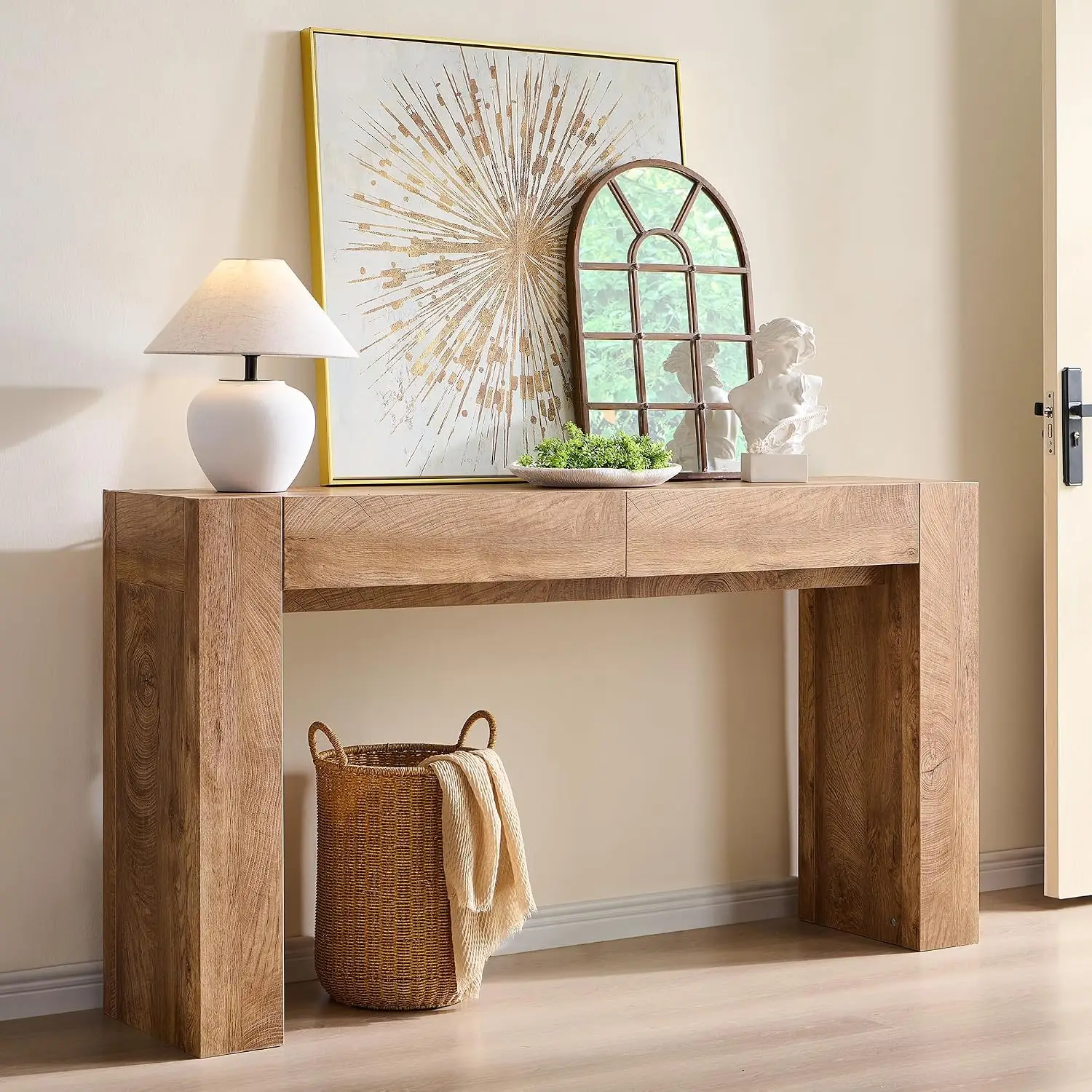 -58%
-58%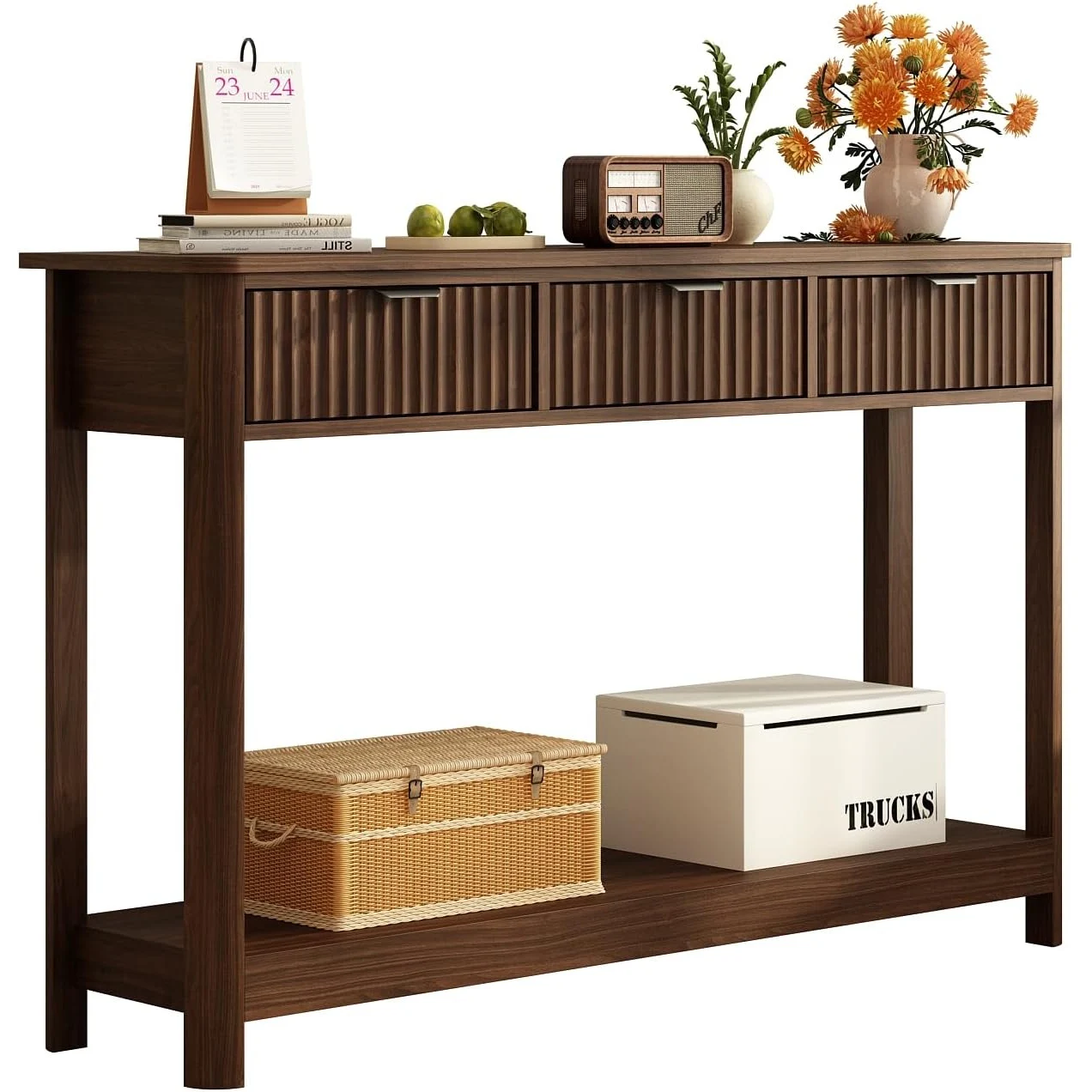 -56%Boho Pick
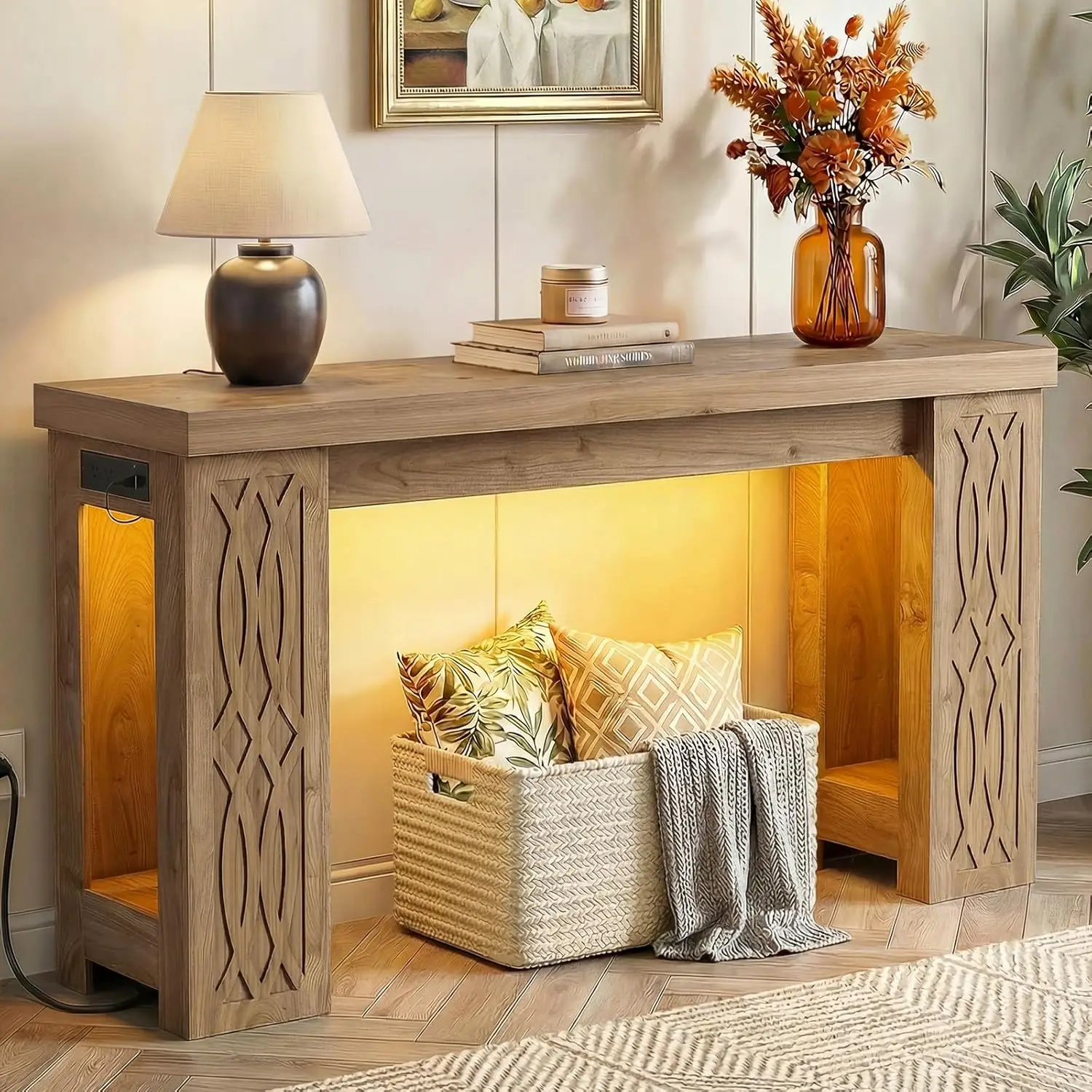 -60%Smart Pick