
Affiliate Disclosure: EntrywayConsoleTable is reader-supported. When you buy through links on this site, we may earn a small commission at no extra cost to you.
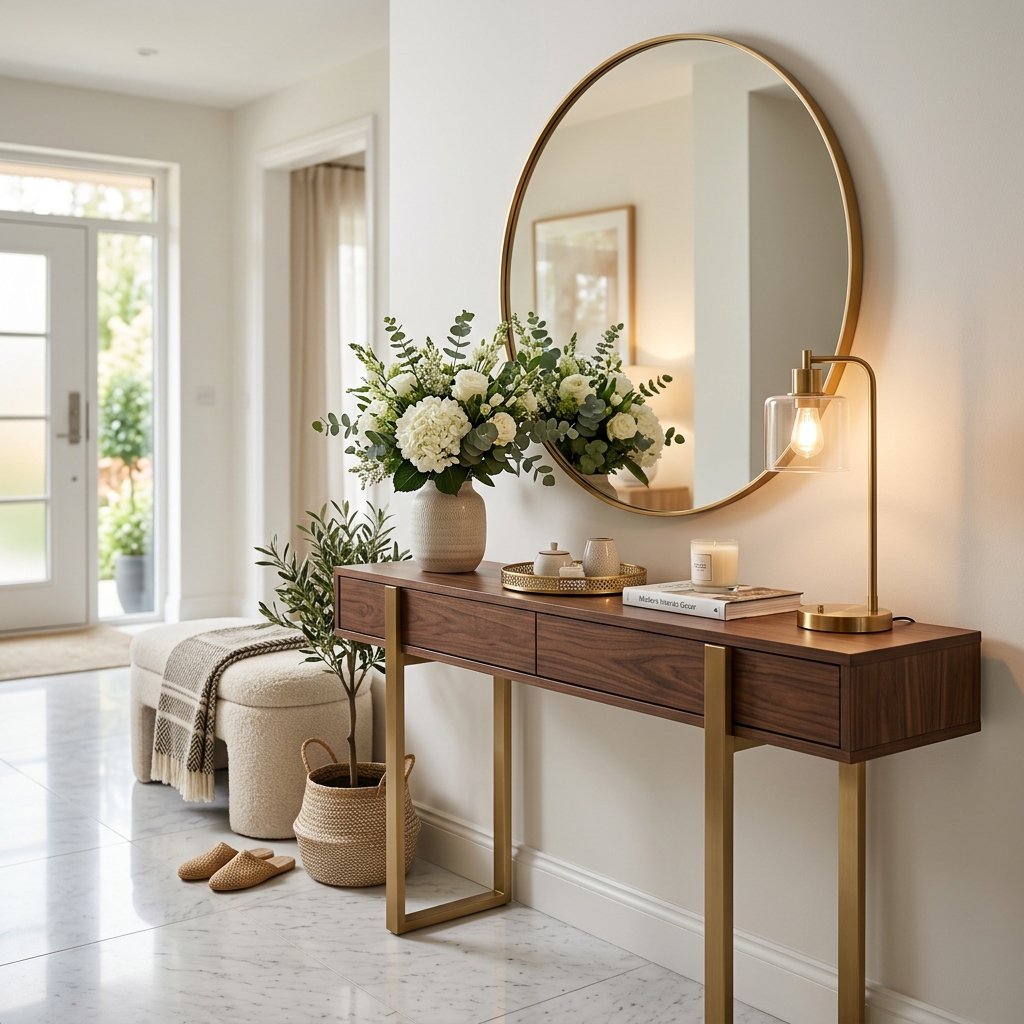
A mid-century console table brings nostalgic chic to your entryway — warm walnut, splayed tapered legs, and honest craftsmanship that feels both retro and fresh. It is vintage modern without the fuss.
The best mid-century entryway console is 42-55 inches wide, 12-15 inches deep, in walnut or teak finish with solid tapered legs and one or two shallow drawers.
Here is how to pick wood, legs, size, and decor so your retro entryway furniture looks curated, not costume.
Key Takeaways
- Signatures: tapered legs, warm woods, slim drawers, brass pulls.
- Top woods: walnut, teak, acacia, and white oak in retro stains.
- Ideal size: 42-60” wide, 12-15” deep, 30-34” high.
- Pair with arched mirrors, drum lamps, and abstract art.
- Budget $110-$300 veneer; $350-$700 solid wood vintage-style.
- Keep undertones warm; avoid cool gray walls without textiles.
The Mid-Century Look, Defined
Born from 1950s Danish and American design, mid-century modern favors function, organic shapes, and minimal hardware. For consoles, that means a simple case on peg legs, sliding or shallow drawers, and long, unbroken grain.
New to styles? Start with the entryway console table style guide and console table styles.
Key Details to Look For
- Legs: Round tapered dowels splayed 10-15 degrees, often with brass ferrules or sabots.
- Case: Flat-front drawers, tambour or sliding doors, no raised panels.
- Hardware: Slim brass bar pulls, recessed edge pulls, or carved wooden pulls.
- Finish: Matte or satin oil, open grain, in medium walnut, honey teak, or light oak.
Avoid thick high-gloss cherry or black lacquer with turned legs — that reads traditional, not retro.
Woods, Finishes, and Leg Construction
Walnut, Teak, and Alternatives
Solid American black walnut ($500+) offers depth and refinishability. Most 2026 models use walnut veneer on MDF ($130-$320) — lighter and less prone to warping in entry humidity. Acacia and rubberwood stained walnut are durable budget alternatives. White oak in a honey finish gives a lighter Scandinavian retro feel ideal for small spaces.
Maintenance is simple: dust weekly, use coasters under vases, and re-oil solid wood yearly. See console table materials maintenance for product picks.
Legs and Joinery Quality
Best: solid wood tapered legs attached with angled mounting plates + bolts + wood glue. Good: solid legs with metal brackets. Avoid: hollow plastic legs or legs screwed into particleboard without plates — they wobble within months.
Check drawer glides: wood-on-wood is authentic but sticks; metal side-mount glides with stops are smoother for daily keys and mail. Weight capacity of 80-150 lbs is typical.
Colors and Pairings
Walnut console + cream walls + black mirror frame = timeless. Add olive, rust, or mustard textiles for retro warmth. Brass legs and pulls bridge to modern lighting. If your home is all gray, warm it with a jute runner and oak frames or consider a lighter oak console instead. More color help in rattan wicker console for natural complements.
Sizing and Layout
Find Your Fit
Measure wall length, then choose 50-75% coverage. A 60-inch foyer wall pairs with a 42-47 inch console. Keep 30+ inches of walkway. For mirror consoles, center the mirror at 57-60 inches from floor.
Low credenza consoles (28-30” high, 55-70” long) suit wide foyers under gallery walls. Standard consoles (32-34” high) suit narrow halls and lamp placement. Floor-anchoring tips are in our modern console table guide.
Storage Comparison
| Style | Storage | Best For | Price Range |
|---|---|---|---|
| 2-drawer slim | Keys, mail, sunglasses | Narrow retro hall | $110-$250 |
| 3-drawer / door combo | Gloves, dog gear | Family entry | $200-$400 |
| Sliding-door credenza | Shoes, bags | Wide foyer | $300-$650 |
| Open shelf + drawer | Books, baskets | Display lovers | $130-$300 |
Soft-close drawers are worth $30-$50 extra — they prevent slamming and protect veneer edges.
Styling Vintage Modern
Top Styling Formula
Hang a 24-30 inch round brass mirror or abstract canvas 6-10 inches above. Place a 22-26 inch linen drum lamp on one side for warm 2700K light. Balance with a low walnut tray + small succulent on the other side. Two coffee-table books underneath add height without clutter.
Mix eras: mid-century walnut + contemporary art + one curved boucle object keeps it 2026, not 1962. Lighting layers explained in console table lighting.
Rug, Wall, and Adjacent Pieces
Use a 2.5x7 ft wool or jute runner with warm beige pattern to ground tapered legs. If floors are dark walnut, choose a lighter oak console or add a light rug to avoid a heavy block. Nearby coat rack in black metal + wood ties the look together.
Explore cross-styles: modern sleek consoles, traditional elegance, and unique artistic pieces.
Common Mistakes to Avoid
- Matching all woods exactly: Walnut table + walnut floor + walnut frames looks flat. Vary tone by 2-3 shades.
- Buying too short: A 36-inch console lost on an 8-foot wall looks sparse. Size up or add a bench alongside.
- Ignoring splay footprint: Splayed legs need 2-3 inches extra depth. Measure at floor, not just tabletop.
- Using cool LEDs: 4000K+ bulbs make walnut look gray. Use 2700-3000K warm bulbs.
- Overloading thin legs: Vintage-style peg legs hold less. Distribute heavy baskets low and centered.
- Skipping felt pads: Tapered legs scratch wood floors. Add pads day one.
Conclusion
Mid-century modern works when wood is warm, legs are tapered, and styling mixes old and new. Choose walnut veneer with solid legs and brass pulls in the 42-55 inch range for most entryways.
Ready for next steps? Browse the entryway console table style guide, materials maintenance, and top console trends to finalize your vintage modern foyer.
🔥 Today's Best Console Table Deals
Hand-picked discounted picks from AliExpress — prices change often, check the live price.
 -52%
-52% -57%
-57% -56%Boho Pick