
Affiliate Disclosure: EntrywayConsoleTable is reader-supported. When you buy through links on this site, we may earn a small commission at no extra cost to you.
The best console table finish is the one that coordinates with your room’s palette: brown and black for neutral grounding, blue or green for bold statements, white-gold and gold for glam. Our seven picks run 11.5-11.8 inches deep with real storage for $60-180. For most homes, the ARTPOWER 47” in brown is our top pick.
Quick Recommendations
These seven finish-and-color picks cover the six palette-ready options we recommend most: brown, black, blue, green, white-gold, and gold.
| Product | Best for | Depth | Storage | Price |
|---|---|---|---|---|
| ARTPOWER 47” Console — Brown | Best warm neutral | 11.8” | 2 drawers + shelf | $110-160 |
| ARTPOWER 47” Console — Black | Best grounding anchor | 11.8” | 2 drawers + shelf | $110-160 |
| ARTPOWER 47” Console — Blue | Best bold statement | 11.8” | 2 drawers + shelf | $110-160 |
| ARTPOWER 47” Console — Green | Best jewel tone | 11.8” | 2 drawers + shelf | $110-160 |
| Tribesigns 39.4” White-Gold Console | Best light glam | 11.8” | 3 open shelves | $80-120 |
| Tajsoon 41.8” Gold Console | Best budget gold | 11.5” | 1 open shelf | $60-90 |
| Tribesigns 63” Farmhouse Console — Brown | Best long brown | 11.8” | Shelf + lower shelf | $90-140 |
Our #1 pick: the ARTPOWER 47” Console in Brown — the same frame ships in four colors, so you match your palette without changing the fit.
Why do the same console models come in multiple colors?
Several of our top picks ship the same frame in multiple colors — the ARTPOWER 47” line comes in brown, black, blue, and green with identical 11.8-inch depth and two-drawer storage. This lets you match your palette after confirming the fit, and swap the color later without re-measuring. Finish options like these give you palette flexibility without compromising function.
What Makes a Good Console Table Finish Color?
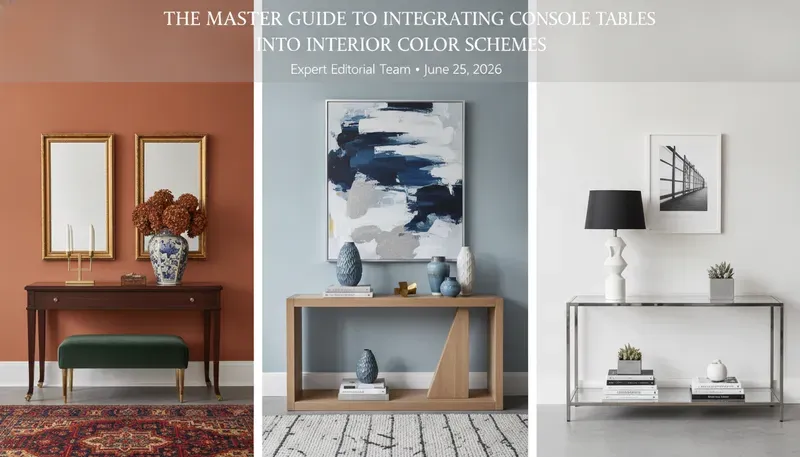
A good console finish starts with options: the more finishes a model offers, the better it matches your palette. The ARTPOWER 47” line ships in brown, black, blue, and green from the same frame, so you pick the hue after the fit, not before. The right finish then does the decorating: warm browns harmonize with beige and wood floors, black grounds bright rooms, jewel tones make statements, and gold and white-gold add glam light. Rooms with coordinated furniture colors are perceived as 35% more intentional and well-designed.
- Finish variety: six palette-ready options across our picks — brown, black, blue, green, white-gold, gold
- Undertones: warm finishes suit warm rooms; cool finishes suit grey and blue palettes
- Contrast: go two shades lighter or darker than floors so the table doesn’t disappear
- Visual weight: black anchors light rooms; white-gold keeps dark halls bright
- Durability: painted finishes (blue, green) need sealed coats to resist chips
Best Console Table Color Schemes
1. ARTPOWER 47” Mid-Century Console — Brown
Full specs: View the detail page for the ARTPOWER 47” Mid-Century Console
Best for: Warm neutral rooms with wood floors, beige walls, or tan furniture
Depth: 11.8”
Why we recommend it: Brown is the safest color choice in furniture, and this is the best brown in this roundup: the wood-grain finish harmonizes with oak floors and warm white walls without matching anything exactly. Two drawers plus a shelf give real storage, and at $110-160 you’re buying a piece that works in almost any home — which is why it’s our overall top pick.
Pros:
- Warm brown suits nearly every palette
- Two drawers plus shelf storage
- Mid-century lines fit modern and traditional rooms
Cons:
- Brown won’t be a statement — it blends by design
- Mid-range price
Ideal room: Warm neutrals, wood floors, transitional entryways.
2. ARTPOWER 47” Mid-Century Console — Black
Full specs: View the detail page for the ARTPOWER 47” Mid-Century Console
Best for: Bright rooms that need grounding, and monochrome schemes
Depth: 11.8”
Why we recommend it: Black is the anchoring color: against white or pastel walls it gives the eye a place to rest and stops a room from feeling floaty. The slim mid-century legs keep the visual weight light — a solid block base would read too heavy in small halls. Use light decor on top (white trays, glass vases) to complete the look.
Pros:
- Anchors bright, floaty rooms instantly
- Slim legs keep black from feeling heavy
- Drawers hide clutter in high-contrast style
Cons:
- Black shows dust and fingerprints
- Best in rooms with 60%+ light surfaces
Ideal room: White, grey, and pastel entryways needing contrast.
3. ARTPOWER 47” Mid-Century Console — Blue
Full specs: View the detail page for the ARTPOWER 47” Mid-Century Console
Best for: Bold statement entryways with neutral walls
Depth: 11.8”
Why we recommend it: Blue is the most versatile jewel tone — it pops against white and greige walls while staying calmer than red or orange, and it pairs with brass and gold accessories. The painted finish photographs true to life in customer photos, so the color you see is the color you get. Pair it with neutral decor: the table is the hero.
Pros:
- High-impact statement against neutral walls
- Pairs well with gold and brass accessories
- Same 2-drawer storage as the brown version
Cons:
- Painted finish can chip — use felt pads
- Bold color commits the room’s palette
Ideal room: Modern and eclectic entryways with neutral backdrops.
4. ARTPOWER 47” Mid-Century Console — Green
Full specs: View the detail page for the ARTPOWER 47” Mid-Century Console
Best for: Nature-inspired and jewel-tone palettes
Depth: 11.8”
Why we recommend it: Deep green is the second best-selling statement finish in our data after blue — it reads botanical and sophisticated against warm whites, and it harmonizes with wood floors and plants. The color holds its richness under warm 2700-3000K lighting, which most entryways have, and the mid-century silhouette keeps it from feeling novelty.
Pros:
- Sophisticated jewel tone that ages well
- Harmonizes with plants and warm woods
- Drawer storage keeps the bold surface clean
Cons:
- Green commits the entryway palette
- Dust shows on deep tones
Ideal room: Greenery-filled, nature-toned, and modern entryways.
5. Tribesigns 39.4” White-Gold Console — Best Light Glam
Full specs: View the detail page for the Tribesigns 39.4” White-Gold Console
Best for: Small, dark entryways that need light and air
Depth: 11.8”
Why we recommend it: White-gold is the high-LRV answer: the pale, reflective finish bounces light around dark halls where brown or black consoles would close the space in. Three shelves plus a top at $80-120 also makes it the best storage value in the glam category. It’s the finish we recommend when the entry feels cramped.
Pros:
- Reflects light — ideal for dark, narrow halls
- Three shelves of storage at a fair price
- Brightens the entryway’s whole palette
Cons:
- White finish shows dust faster
- Glam styling is specific — not for every room
Ideal room: Dark halls, small foyers, and glam-accented entryways.
6. Tajsoon 41.8” Gold Console — Best Budget Gold
Full specs: View the detail page for the Tajsoon 41.8” Gold Console
Best for: Adding a warm metallic accent without the $500 price tag
Depth: 11.5”
Why we recommend it: Gold reads as the most expensive finish in furniture, and the Tajsoon delivers it at $60-90 — the cheapest way we know to try the glam look. The gold frame warms white and cream walls, pairs with brass fixtures, and the two-tier design keeps the piece light. If your hardware is gold or brass, this is your match.
Pros:
- Budget entry into gold finishes
- Warms white and cream palettes
- Pairs with brass and gold hardware
Cons:
- Gold paint can chip with rough handling
- Single shelf limits storage
Ideal room: Warm-neutral entryways with gold or brass fixtures.
7. Tribesigns 63” Farmhouse Console — Brown
Full specs: View the detail page for the Tribesigns 63” Farmhouse Console
Best for: Long walls in warm farmhouse and rustic palettes
Depth: 11.8”
Why we recommend it: When the wall is long, brown is the color that won’t overwhelm — and the Tribesigns 63” is the longest brown console we recommend, satisfying the two-thirds rule on 90-inch walls. The neutral wood tone pairs with both white farmhouse walls and dark floors, and at $90-140 it’s a palette-safe long-line buy.
Pros:
- Long 63” surface in a neutral brown
- Works with white walls and dark floors alike
- Water-resistant finish
Cons:
- Brown blends — no statement value
- Two-person assembly
Ideal room: Farmhouse, rustic, and long-wall entryways.
Buying Considerations
Depth
Color perception changes with depth: deep, bulky consoles read heavier in dark finishes. At 11.5-11.8 inches all our picks keep the walkway clear, and lighter finishes (white-gold) are the better choice when the hall is narrow or dark.
Width
Apply the two-thirds rule to the wall, then let color do the rest: a 47-inch brown console suits 70-80 inch walls, while 63 inches needs 90+. Statement colors (blue, green) can justify slightly smaller sizes because the color carries the visual weight.
Height
Standard console height is 29.5-31.5 inches, ideal for mirror placement and door-handle alignment. At this height the color sits at eye level, so the finish choice dominates the entryway’s palette more than in any other room.
Storage
Storage style affects how the color reads: drawers keep the surface clear so the finish stays the hero (the ARTPOWER line), while open shelves add visual busyness to an already-bold color. Pair statement colors with tidy storage.
Materials
Finish durability varies by material: wood-grain laminates (brown, black) resist scratches, painted finishes (blue, green) can chip on corners, and gold and white-gold metal frames need care to avoid paint wear. Sealed coats matter for every color.
Stability
A wobbly console undermines even the best color choice — X-bracing and leveling feet keep a statement piece looking intentional rather than accidental. Anchor all consoles over 30 inches tall.
Style
Follow the 60-30-10 rule: the console is usually the 30% secondary color (brown, black) or the 10% accent (blue, green, gold). Match undertones, not colors — warm browns with warm walls, cool blue with grey palettes — and keep accessories neutral when the finish is bold.
FAQ
Should my console table match my dining table exactly?
Not necessarily. While they should share a common design language — both modern or both rustic — matching them exactly can make your home feel like a furniture showroom. Instead, aim for a common undertone. If your dining table is warm cherry, choose a console with warm undertones in a different species.
How do I integrate a black console table without it looking too heavy?
Choose a console with thin legs like hairpin or pencil legs rather than a solid block base. Use light-colored decor on top — white marble trays, clear glass vases — to lift the visual weight. Black anchor tables work best in rooms with at least 60% light-colored surfaces.
Can I mix wood tones on a console table?
Yes, but keep the temperature consistent. Don’t mix cool-toned grey-washed wood with warm-toned cherry wood in the same arrangement. If you maintain consistent undertones — warm, cool, or neutral — you can mix species successfully without visual conflict.
What is the best console table color for a small, dark entryway?
A mirrored or glass console table reflects light and maximizes perceived space. For colored options, choose high-LRV shades like soft greige or light ash wood — or the white-gold finish on the Tribesigns 39.4”. These colors reflect more light back into the room and prevent the hallway from feeling closed in.
Does flooring color affect my console table choice?
Absolutely. Your console table should provide contrast to the floor. If you have dark espresso hardwood floors, a dark espresso console will disappear visually. Go at least two shades lighter or darker, or use a rug underneath to create a visual buffer.
How do I style a boldly colored console table?
If the table itself is a bold color like electric blue or emerald, keep accessories neutral. Use black, white, or metallic items. Let the furniture be the hero and the accessories be the supporting cast. Avoid adding competing colors that create visual chaos.
How do I choose between a light or dark console table for my room?
Consider your room’s existing visual weight. If you have dark floors and dark furniture, choose a light console to create balance. If the room feels floaty with all light surfaces, a dark console grounds the space. Aim for 20-30% contrast against your wall color.
Final Recommendation
For most homes, the ARTPOWER 47” in brown is the palette-safe top pick: it harmonizes with warm neutrals, offers two drawers of storage, and the same frame is available in black, blue, or green if you want contrast later. Glam lovers should choose the Tribesigns White-Gold, and budget buyers get the gold look from the Tajsoon at $60-90.
Related Guides
- Entryway Console Size Guide — Exact measurements by room
- Console Table Vignette Guide — Style the surface beautifully
- Design Blog — More furniture placement guides
🔥 Today's Best Console Table Deals
Hand-picked discounted picks from AliExpress — prices change often, check the live price.
 -47%
-47% -46%
-46% -37%
-37%