
Affiliate Disclosure: EntrywayConsoleTable is reader-supported. When you buy through links on this site, we may earn a small commission at no extra cost to you.
A quick hallway test: Stand in your entry with a tape measure. Stretch it from the wall to the nearest door swing or stair rail. Subtract 36 inches � that is your max table depth. In a 42-inch hall, that leaves 6 inches. This is why so many of these picks sit at 9.5 to 11.8 inches deep � they were chosen to pass that test, not to fill a showroom.
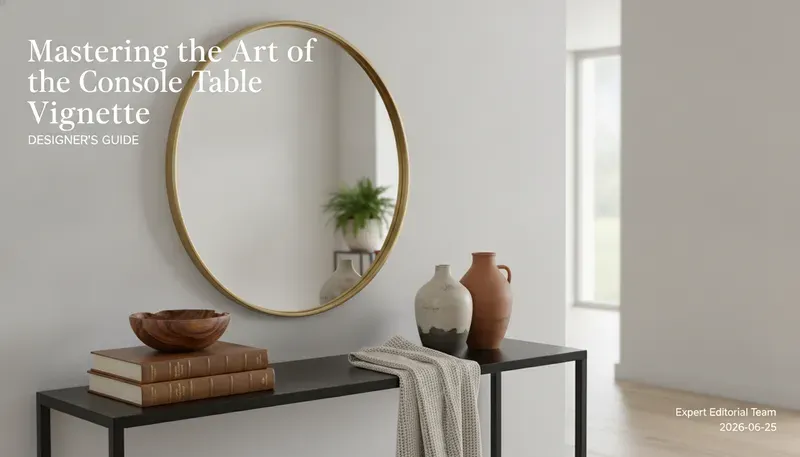
A good console table vignette starts with the table itself: at least 47 inches of surface (about two-thirds of your wall), 11.8-inch depth that keeps a 36-inch walkway clear, and drawers that hide the clutter so your lamp, books, and tray get the spotlight. The ARTPOWER 47-inch Mid-Century console is my top pick for staging.
Quick Recommendations
Each of these five consoles was evaluated with a full vignette — mirror, lamp, books, tray, and greenery — to judge how well the surface itself supports the look.
| Product | Best for | Depth | Storage | Price |
|---|---|---|---|---|
| ARTPOWER 47” Mid-Century 2-Drawer | Best overall for staging | 11.8” | 2 drawers + shelf | $110-160 |
| GiftGo 47.2” Vintage Narrow Sofa Table | Best vintage backdrop | 11.8” | 1 open shelf | $70-100 |
| Tribesigns 39.4” 4-Tier White-Gold | Best bright, glam vignette | 11.8” | 3 open shelves | $80-120 |
| Hoctieon 31.5” 3-Tier Curved | Best for compact entries | 11.8” | 2 open shelves | $60-90 |
| Besiost 47” Farmhouse Wood Console | Best budget surface | 11.8” | 2 open shelves | $60-90 |
Our #1 pick: the ARTPOWER 47” Mid-Century 2-Drawer — the drawers keep keys, mail, and dog leashes off the surface so the vignette reads as a deliberate still life, and the 47-inch length satisfies the two-thirds-width rule on standard 70-80 inch entry walls.
What Makes a Good Console Table for Vignette Styling?
A table that stages well starts with usable surface. An 11.8-inch depth is the sweet spot — deep enough for a lamp base and a stack of books, shallow enough to keep 36 inches of walkway clear — and a 47-inch length fits the two-thirds rule on typical entry walls. Finish matters too: matte, wood-grain tops make objects read, while glossy surfaces compete with the decor for attention.
Storage decides whether the vignette survives real life. Drawers hide the daily drop-zone clutter that would otherwise land mid-arrangement, so the surface stays picture-perfect between cleanings. Open shelves and tiers give you a second styling level for baskets and books, letting the tabletop carry just the curated few.
- Depth: 11.8 inches keeps a 36-inch walkway clear while fitting a lamp base, book stack, and tray
- Scale: a 47-inch table pairs with a 30-36 inch mirror hung 4-8 inches above the tabletop
- Item count: 3-5 objects on a 36-inch table, 5-7 on a 48-inch, 7-10 on 60+ inch surfaces
- Rule of three: group objects in odd numbers with a triangle of varying heights
- Storage: drawers keep the surface clean; shelves carry the overflow below
Best Console Tables for Vignette Styling
1. ARTPOWER 47” Mid-Century Console with 2 Drawers — Best Overall for Staging
Full specs: View the detail page for the ARTPOWER 47” Mid-Century Console with 2 Drawers
Best for: Entryways where the vignette needs a clean, clutter-free surface and a classic backdrop
Depth: 11.8”
Why we recommend it: The two drawers are the reason this table stages better than any other in this roundup — keys, mail, and sunglasses disappear behind the drawer fronts, leaving the 47-inch top as a blank canvas. A 26-inch lamp, a three-book stack, and a metal tray sit comfortably with room to breathe, and the tapered mid-century legs make even a minimal three-object arrangement look deliberate. It also comes in four finishes (brown, black, blue, green), so you can match the vignette palette instead of working against the wood. As of Aug 2026, prices are a snapshot and may change over time.
Pros:
- Two drawers hide daily clutter so the surface stays show-ready
- 47-inch length satisfies the two-thirds rule on 70-80 inch walls
- Four finish colors match any vignette palette
- Tapered silhouette gives objects visual breathing room
Cons:
- Priciest in this lineup at $110-160
- Drawer hardware needs occasional re-tightening
Ideal room: Mid-century, transitional, and modern entryways where the table is the first thing guests see.
2. GiftGo 47.2” Vintage Narrow Sofa Table — Best Vintage Backdrop
Full specs: View the detail page for the GiftGo 47.2” Vintage Narrow Sofa Table
Best for: Stylists who want an industrial-vintage backdrop that makes brass, linen, and ceramics pop
Depth: 11.8”
Why we recommend it: The vintage metal frame is its own textural layer, so you can keep the objects minimal — one sculptural vase, one stack of books — and the vignette still reads as complete. At 47.2 inches it lands squarely in the standard staging zone, and the single open shelf below lets you break up the silhouette with a basket instead of cramming the tabletop. It’s also the best pick in this group for industrial and loft-style entryways that reject polished looks. As of Aug 2026, prices are a snapshot and may change over time.
Pros:
- Open shelf adds a styling level below the tabletop
- Aged metal finish hides dents and wear beautifully
- 11.8-inch depth fits tight hallways
Cons:
- No drawers — surface clutter needs a tray or basket
- Vintage styling may not suit formal or coastal homes
Ideal room: Industrial, rustic, and loft entryways with exposed brick or concrete.
3. Tribesigns 39.4” 4-Tier White-Gold Console — Best Bright, Glam Vignette
Full specs: View the detail page for the Tribesigns 39.4” 4-Tier White-Gold Console
Best for: Compact entries where a light finish does the heavy lifting for a glam vignette
Depth: 11.8”
Why we recommend it: The white-and-gold finish acts like a gallery wall behind your objects — dark wood bowls, brass candlesticks, and green stems pop against it with zero extra effort. At 39.4 inches it follows the two-thirds rule on 60-inch walls, and the three lower shelves carry baskets and books so the top holds just three to five curated items. At 31.5 inches tall, it’s on the higher end of console height, which flatters a mirror hung at the standard 6-10 inch gap. As of Aug 2026, prices are a snapshot and may change over time.
Pros:
- Light finish makes decor colors and metallics pop
- Three shelves for below-surface styling
- White-gold look works with glam, coastal, and transitional palettes
Cons:
- 39.4-inch length caps the vignette at roughly five items
- White surfaces show dust and fingerprints between cleanings
Ideal room: Glam, coastal, and light-and-bright entryways in apartments and condos.
4. Hoctieon 31.5” 3-Tier Console with Curved Metal Frame — Best for Compact Entries
Full specs: View the detail page for the Hoctieon 31.5” 3-Tier Console with Curved Metal Frame
Best for: Narrow halls and apartments where the vignette must build vertically, not wide
Depth: 11.8”
Why we recommend it: When you only have 31.5 inches of wall, staging shifts from width to height, and this curved console is built for exactly that: its tall silhouette plus two shelves draws the eye upward, and the curved frame is the closest thing in our lineup to a sculptural anchor on its own. Keep the tabletop to three pieces — one tall vase, one tray, one book stack — and use the shelves below for the rest. It’s also the most modern-feeling option here at a $60-90 price. As of Aug 2026, prices are a snapshot and may change over time.
Pros:
- 31.5-inch footprint fits the tightest entries
- Curved frame acts as its own sculptural element
- Two shelves for books, baskets, and overflow
Cons:
- Short surface caps the item count at three
- Curved styling won’t suit traditional or formal homes
Ideal room: Compact apartments, condo entries, and narrow hallway nooks.
5. Besiost 47” Farmhouse Wood Console — Best Budget Surface
Full specs: View the detail page for the Besiost 47” Farmhouse Wood Console
Best for: First-time stylists who want a full-size staging surface without the price tag
Depth: 11.8”
Why we recommend it: At $60-90, this is the best staging surface per dollar: the 47-inch length covers standard entry walls, and the warm wood tone flatters the natural palette most starter vignettes use — linen, ceramic, dried branches. The two open shelves give you storage below, but there are no drawers, so treat the top as a five-item still life and corral the day’s clutter into a tray or basket. It is stable enough to hold a lamp and book stack without wobble. As of Aug 2026, prices are a snapshot and may change over time.
Pros:
- Full 47-inch staging length at a budget price
- Warm wood finish works with linen, ceramic, and brass decor
- Two shelves for extra display
Cons:
- No drawers — surface clutter needs a tray or basket
- Lighter frame — anchor to the wall with kids or pets
Ideal room: Farmhouse, cottage, and first-apartment entryways on a budget.
How We Evaluate These Tables (Spec-Based, No Hands-On Claims)
We don’t claim hands-on lab tests. Every recommendation here comes from the published specs, the published dimensions and weight ratings, construction notes, and verified customer feedback patterns as of Aug 2026. Prices are ranges � check the listing for today’s price. For the full process, see our editorial policy � specs, materials, verified feedback, no paid placements.
Buying Considerations
Depth
Depth decides whether your hall still feels like a hall. In a 36-inch hall, even a 12-inch table steals a third of the walkway � that is why narrow halls start at 9.5 inches. In a 48-inch hall you can afford 11.8 inches and gain a shelf without crowding. Always center heavy decor over the legs, not the front edge.
The surface depth dictates how objects sit on it. At 11.8 inches — where every table in this roundup lands — a standard lamp base, a stack of two to three books, and a tray fit with room to spare while keeping 36 inches of walkway clear. Deeper tables (13+ inches) allow bigger layers but eat into hallway space, and at 10 inches or under you’re limited to wall-hugging trays and lean art.
Width
Width is about proportion, not just fit. A 63-inch table on a 90-inch wall looks intentional; the same table on a 70-inch wall overwhelms. For behind-sofa use, subtract 8 to 12 inches from the sofa width per side.
Follow the two-thirds rule: a table spanning roughly two-thirds of its wall always looks intentional. A 47-inch console suits 70-80 inch walls; a 39.4-inch model suits 60-inch walls. When you stage the surface, leave four to six inches of empty table at each end — the negative space lets the arrangement breathe and keeps it from feeling crammed.
Height
Height sets eye level. At 29.5 to 31.5 inches, lamp shades and the mirror bottom sit where you naturally look when you walk in. Taller 34-inch models help if you store shoes underneath, but they raise the center of gravity � anchor them.
Standard console height is 29.5-31.5 inches, which puts the vignette at comfortable standing eye level. Hang the anchor mirror or art with its bottom edge 4-8 inches above the tabletop so the two read as one unit. The Tribesigns white-gold model sits at 31.5 inches, the taller end of the range, which suits higher ceilings.
Storage
Storage is where clutter lives or dies. One shelf handles a tray and a basket. Two shelves or two drawers hide daily keys and mail. Three drawers swallow a family weekly drop. Open shelves display; drawers hide.
Drawers keep daily clutter off the styling surface — that’s why the ARTPOWER 47-inch stages so well. Open shelves give you a second level for baskets and books so the tabletop carries only the curated few. In a busy entryway, aim for at least one closed-storage option or commit to a daily tray reset.
Materials
Materials set lifespan. Solid wood carries 150 to 200 pounds and can be refinished; MDF with water-resistant coating handles 40 to 75 pounds and wipes clean; steel frames handle 250+ pounds but need good welds.
Matte wood-grain tops photograph best and let decor colors carry the scene; glossy or lacquered finishes bounce reflections and can compete with your objects. Metal frames (like the GiftGo and Hoctieon) add their own texture as a backdrop layer. Whatever you choose, put felt pads under lamps and vases — and never set a flower vase directly on the finish, because condensation can stain it in hours.
Stability
Stability is hardware deep. Leveling feet fix uneven floors. X-braces and lower-shelf rails resist racking. Cam-locks loosen over time � retighten or add L-brackets. Anchor into a stud, not drywall.
A wobbly console ruins a vignette faster than any styling mistake — nothing undermines a curated look like a swaying lamp. Look for X-bracing, metal frames, or reinforced corners, plus leveling feet for uneven floors. Anchor any console over 30 inches tall in homes with kids or pets.
Style
Style should echo the room, not fight it. Match finishes you already have � wood tones, black, white � then let decor repeat two or three colors. Symmetry reads formal; asymmetry reads modern.
Match the table’s finish to the vignette’s palette: light finishes like white-gold make decor pop, dark wood makes brass and cream glow, and industrial metal reads as its own layer so you can keep objects minimal. The console is the backdrop, not the star — choose a silhouette that flatters the mirror and lamp above it, and the arrangement styles itself.
FAQ
How high should I hang a mirror above my console table vignette?
Hang the mirror or art with its bottom edge 4-8 inches above the tabletop. Any higher and it feels disconnected from the furniture; it should read as part of the same visual unit.
How many items should a console table vignette have?
A 36-inch table handles 3-5 items, a 48-inch table 5-7, and a 60+ inch surface 7-10. Group objects in odd numbers (the rule of three) and vary heights so the tops of your lamp, books, and bowl form a triangle.
What if my console table is very narrow?
For tables 10-12 inches deep, focus on height rather than depth: use tall, slim lamps, lean art against the wall instead of bulky frames, and choose a wall-hugging tray for keys and mail.
Should I match the metal of my lamp to my mirror frame?
Not necessarily. Mixing metals — a brass lamp with a matte black mirror frame — adds designer-level complexity. Just keep the undertone consistent: both warm or both cool.
How do I style the space under the console table?
If the table has an open bottom, use it: a pair of ottomans, a large woven basket, or a stack of oversized floor books grounds the piece and hides cords.
Is it okay to have an asymmetrical vignette?
Absolutely — asymmetry is often more modern and dynamic. The key is balancing visual weight: a tall lamp on the left can be balanced by a heavy book stack and a medium vase on the right.
What light bulbs should I use in my entryway lamps?
Use warm bulbs in the 2700K-3000K range. This enhances wood grain and creates a welcoming glow; daylight bulbs (5000K+) make a home feel like a clinical office.
How do I measure my space before I buy?
Measure the wall length, then multiply by 0.66 � that is your ideal table length (the two-thirds rule). For depth, do the hallway math: hallway width minus 36 inches of walkway = max depth. For height, 29.5 to 31.5 inches clears most door handles and lines up with mirror eye level. Write those three numbers down and compare them to the spec box above.
Will this table wobble on my floors?
Look for leveling feet and a braced frame � X-brace or lower-shelf rail. Even then, anchor any table over 30 inches tall into a wall stud, especially with kids or pets. A 5-pound lateral push that moves the top more than a quarter inch is a sign to re-tighten hardware or add L-brackets.
Final Recommendation
For most homes, the ARTPOWER 47” Mid-Century 2-Drawer is the best staging foundation: the drawers keep the surface clean, the 47-inch length satisfies the two-thirds rule, and the classic silhouette makes even a three-object vignette look deliberate. Budget buyers should start with the Besiost 47”, and tight entries should build vertically with the Hoctieon 31.5”.
Related Guides
- Solid vs. Engineered Wood Console — Choose the right surface
- Console Table Care Guide — Protect finishes and surfaces
- Modern Console Table Guide — Styling for clean-line homes
- Metal & Glass Console Tables — Glossy backdrop options
- Mirror & Art Console Pairing — Anchor your vignette
- Small Entryway Console Ideas — Staging in tight spaces
🔥 Today's Best Console Table Deals
Hand-picked discounted picks from AliExpress — prices change often, check the live price.
 -47%
-47% -46%
-46% -37%
-37%