
Affiliate Disclosure: EntrywayConsoleTable is reader-supported. When you buy through links on this site, we may earn a small commission at no extra cost to you.
The best console tables for anchoring mirrors and art are long, flat-surfaced models at 11.8 inches deep, sized so the mirror spans two-thirds to three-quarters of the table’s width. The Tribesigns 63-inch Farmhouse Console is my top pick at $90-140, with the 55-inch Waterfall Console’s three drawers and the Huuger 54-inch as strong alternatives for mid-size walls.
Quick Recommendations
Here are the console tables I recommend for anchoring mirrors and art, based on pairing each one with everything from 24-inch round mirrors to 48-inch gallery walls.
| Product | Best for | Depth | Storage | Price |
|---|---|---|---|---|
| Tribesigns 63” Farmhouse Console | Best for long walls | 11.8” | Shelf + lower shelf | $90-140 |
| 55” Waterfall Console with 3 Drawers | Best with hidden storage | 11.8” | 3 drawers | $130-180 |
| Huuger 54” Farmhouse Sofa Table | Best for mid-size walls | 11.8” | 2 open shelves | $90-130 |
| Tribesigns 39.4” 4-Tier Rustic Console | Best for compact walls | 11.8” | 3 open shelves | $70-110 |
Our #1 pick: the Tribesigns 63” Farmhouse Console — its length anchors a 42-47 inch mirror under the two-thirds rule, and the flat, water-resistant top keeps the whole vignette grounded and easy to maintain.
What Makes a Good Console Table for Mirror and Art Pairing?
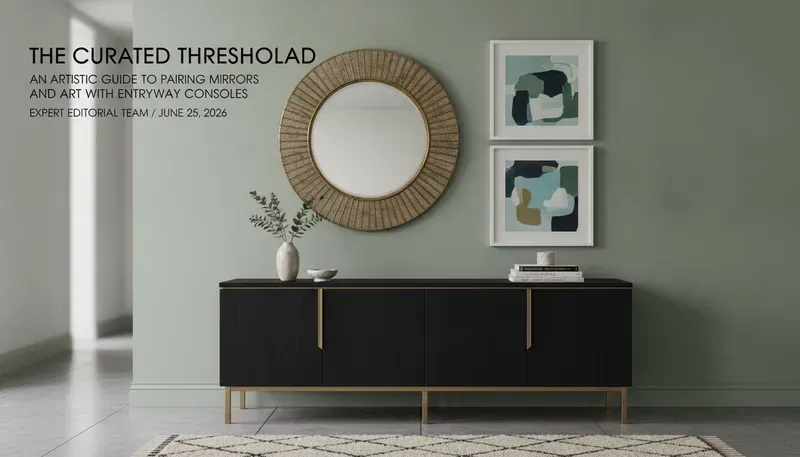
A good console for mirror and art pairing is built around length and a clear surface. The mirror should span roughly two-thirds to three-quarters of the table’s width, so a 63-inch table needs a 42-47 inch mirror while a 39.4-inch table takes a 26-30 inch piece. That makes table length and the uninterrupted space on top the two most important measurements.
I also weigh the hanging math. With the top at 29.5-31.5 inches and the frame bottom 4-8 inches above it, a mirror’s center lands near the 57-60 inch eye level most designers target. Every model below keeps that geometry comfortable while staying under 12 inches deep so hallways keep their 36-inch clearance.
- Length: 47-63 inches suits most entry walls; size the mirror at two-thirds to three-quarters of that width
- Depth: 11.8 inches gives leaning art a stable ledge while preserving a 36-inch walkway
- Top surface: flat and unobstructed — leaning art and vignettes need real estate without lips or rails
- Height: 29.5-31.5 inches keeps the 6-10 inch gap rule and 57-60 inch eye-level math correct
- Stability: heavy mirrors need 50-pound-rated anchors or studs, so the frame below must not wobble
Best Console Tables for Mirror and Art Pairing
1. Tribesigns 63” Farmhouse Console — Best for Long Walls
Full specs: View the detail page for the Tribesigns 63” Farmhouse Console
Best for: Long entry walls where a 42-47 inch mirror or large canvas is the anchor
Depth: 11.8”
Why we recommend it: At 63 inches, this is the only model here that fully anchors a 42-47 inch mirror under the two-thirds rule, and the flat wood-grain top gives leaning art a ledge without a lip. It carries a 40-lb load rating, which matters when a heavy mirror hangs just 4-8 inches above it. The water-resistant finish also shrugs off the damp keys and umbrella trays that sit beneath the mirror.
Pros:
- Long 63” surface clears a 42-47” mirror with balanced overhang on each side
- Water-resistant finish wipes clean under the mirror’s daily reflection
- Neutral wood tone pairs with both black frames and gold-leaf finishes
Cons:
- Needs two people for assembly (30-45 minutes)
- Open shelf needs baskets to keep the drop zone tidy
Ideal room: Farmhouse and transitional entryways with 90-100 inch walls.
2. 55” Waterfall Console with 3 Drawers — Best with Hidden Storage
Full specs: View the detail page for the 55” Waterfall Console with 3 Drawers
Best for: Families who want clutter hidden so the mirror and art stay the focal point
Depth: 11.8”
Why we recommend it: The three deep drawers are the best clutter defense in this roundup — keys, mail, and chargers disappear, keeping the surface below the mirror clean and intentional. At 55 inches it anchors a 37-41 inch mirror comfortably, and the waterfall edge reads as a clean base line that makes the wall arrangement look deliberate rather than floating.
Pros:
- Three drawers keep the space below the mirror visually calm
- Waterfall edge creates a clean line under the vignette
- 55” length suits mid-size entry walls
Cons:
- Highest price point in this roundup
- Drawer hardware requires occasional re-tightening
Ideal room: Family entryways where hidden storage matters more than open display.
3. Huuger 54” Farmhouse Sofa Table — Best for Mid-Size Walls
Full specs: View the detail page for the Huuger 54” Farmhouse Sofa Table
Best for: Mid-size entry walls and behind-sofa placement with a 36-40 inch mirror
Depth: 11.8”
Why we recommend it: The 54-inch length anchors a 36-40 inch mirror or canvas with the two-thirds rule intact, and the two open shelves give you a display base beneath the art for books and baskets. It doubles as a sofa console, which is useful when the same wall vignette needs to work from two rooms.
Pros:
- Dual-purpose: entryway or behind-the-sofa anchoring
- Two shelves for baskets and books under the art
- Stable build at this length
Cons:
- Open storage only, no drawers for clutter
- Mid-range price — better value at 63 inches
Ideal room: Open-plan homes and mid-size entryways.
4. Tribesigns 39.4” 4-Tier Rustic Console — Best for Compact Walls
Full specs: View the detail page for the Tribesigns 39.4” 4-Tier Rustic Console
Best for: Narrow hallways and small entry walls taking a 26-30 inch mirror
Depth: 11.8”
Why we recommend it: For narrow hallways, a mirror is the right call — it breaks the tunnel effect — and at 39.4 inches this table anchors a 26-30 inch mirror with the rule intact. The three open shelves hold baskets below while the top stays clear for a tray and a leaning frame, and the 31.5-inch height keeps the 6-10 inch gap rule comfortable at eye level.
Pros:
- Four tiers of storage in a compact footprint
- 31.5” height keeps the mirror gap math comfortable
- Rustic finish pairs with dark frames
Cons:
- 39.4” length limits you to smaller mirrors and art
- Shelf-heavy look reads more storage than statement
Ideal room: Narrow hallways and apartment entry walls.
Buying Considerations
Depth
Keep depth at 10-12 inches — every model here is 11.8 inches, which leaves a stable ledge for leaning art while preserving the 36-inch walking clearance hallways need. A deeper table pushes visitors farther from the mirror, and the composition reads differently from every standing position.
Width
Size the mirror or art at two-thirds to three-quarters of the console’s width: 42-47 inches over a 63-inch table, 37-41 over the 55-inch, 36-40 over the 54-inch, and 26-30 over the 39.4-inch. Apply the same two-thirds rule to the wall itself so the table, not the wall center, anchors the arrangement.
Height
Most consoles run 29.5-31.5 inches tall, which lands the mirror’s bottom edge 4-8 inches above the top and a mirror center near the 57-60 inch eye level designers target. The Tribesigns 39.4-inch sits at 31.5 inches. Taller 34-inch models shift the gap math and work best with arched or floor-height mirrors.
Storage
Choose hidden storage when clutter is the enemy of your vignette — the 55-inch Waterfall’s three drawers keep the surface below the mirror clear. Open shelves (Tribesigns 63”, Huuger 54”, Tribesigns 39.4”) work when you want a display base beneath the art, but use baskets so the drop zone does not compete with the composition.
Materials
Wood-grain engineered wood tops resist water spots and clean easily under a mirror’s reflection. Match the frame to the mirror frame: black metal over black frames reads cohesive and modern, while rustic wood with gold-leaf creates the high-low contrast designers love. Avoid bare particle board in damp climates.
Stability
Mirrors are the heaviest thing you will hang — use anchors rated for at least 50 pounds or screw directly into a wall stud. That means the console below must be rock solid: look for X-bracing or metal frames, leveling feet for uneven floors, and wall-anchor any table over 30 inches tall in homes with kids or pets.
Style
Let one element lead the composition. A round mirror softens the linear edges of a farmhouse console; an arched mirror adds lift in traditional foyers; a single large canvas needs a quiet frame when the console grain is busy. Mix metals freely as long as a third element — a door handle, sconce, or light fixture — ties the story together.
FAQ
How far above the console should I hang a mirror or art piece?
The bottom of the frame should sit 4-8 inches above the console surface. Hanging too high makes the art float away from the furniture, breaking the visual connection; hanging too low prevents you from placing decorative items on the table without overlapping the frame.
Should I center the console on the wall or the mirror on the console?
Always center the mirror or art on the console table itself, not necessarily on the wall. The furniture and wall decor function as a single visual unit — if the console sits off-center due to a doorway, the art follows the console to maintain that unified composition.
Is it okay if the art is wider than the console table?
Technically yes, but it reads visually unstable and top-heavy. If you must go wider, ground the look with heavy baskets, stools, or a substantial rug beneath the console to restore balance and keep the arrangement from feeling precarious.
How do I choose between a mirror and art for a narrow hallway console?
In narrow hallways a mirror is almost always the superior choice — it breaks the tunnel effect with lateral depth, while art feels flat because viewers cannot step back far enough. The Tribesigns 39.4-inch anchors a 26-30 inch mirror in these spaces.
Can I hang both a mirror and art above the same console table?
Yes. Hang a large mirror as the anchor and lean a smaller artwork against it, or flank the mirror with two smaller, vertically stacked pieces. Keep a clear hierarchy so one piece is the obvious focal point while others support the composition.
What is the best height for a console table used with wall art?
Standard consoles at 29.5-31.5 inches — the Tribesigns 39.4-inch is 31.5 inches — are ideal. This waist-height placement works for both leaning art on the surface and hanging mirrors at comfortable viewing levels.
What lighting works best for mirrors and art above a console?
Sconces on either side of a mirror give the most flattering cross-lighting for faces. Picture lights above art create museum-quality focus, and table lamps wash the lower third of the wall decor with warm ambient light. Layer two or more types for the best result.
Final Recommendation
For most entryways, the Tribesigns 63” Farmhouse Console is the pick — its length anchors a 42-47 inch mirror under the two-thirds rule, and the 11.8-inch depth keeps your hallway clear. If clutter is the problem, step up to the 55” Waterfall Console with three drawers; if your wall is under 60 inches, drop to the Tribesigns 39.4” instead.
Related Guides
- Solid vs. Engineered Wood Console — Choose the right base for a heavy mirror
- Modern Console Table Guide — Pair clean lines with minimal art
- Metal and Glass Console Tables — Match frames to metal consoles
- Acrylic and Mirrored Consoles — Coordinate busy tops with quiet frames
- Console Table Vignette Guide — Style the surface below the art
- Small Entryway Console Ideas — Scale rules for tight walls
🔥 Today's Best Console Table Deals
Hand-picked discounted picks from AliExpress — prices change often, check the live price.
 -47%
-47% -46%
-46% -37%
-37%