
Affiliate Disclosure: EntrywayConsoleTable is reader-supported. When you buy through links on this site, we may earn a small commission at no extra cost to you.
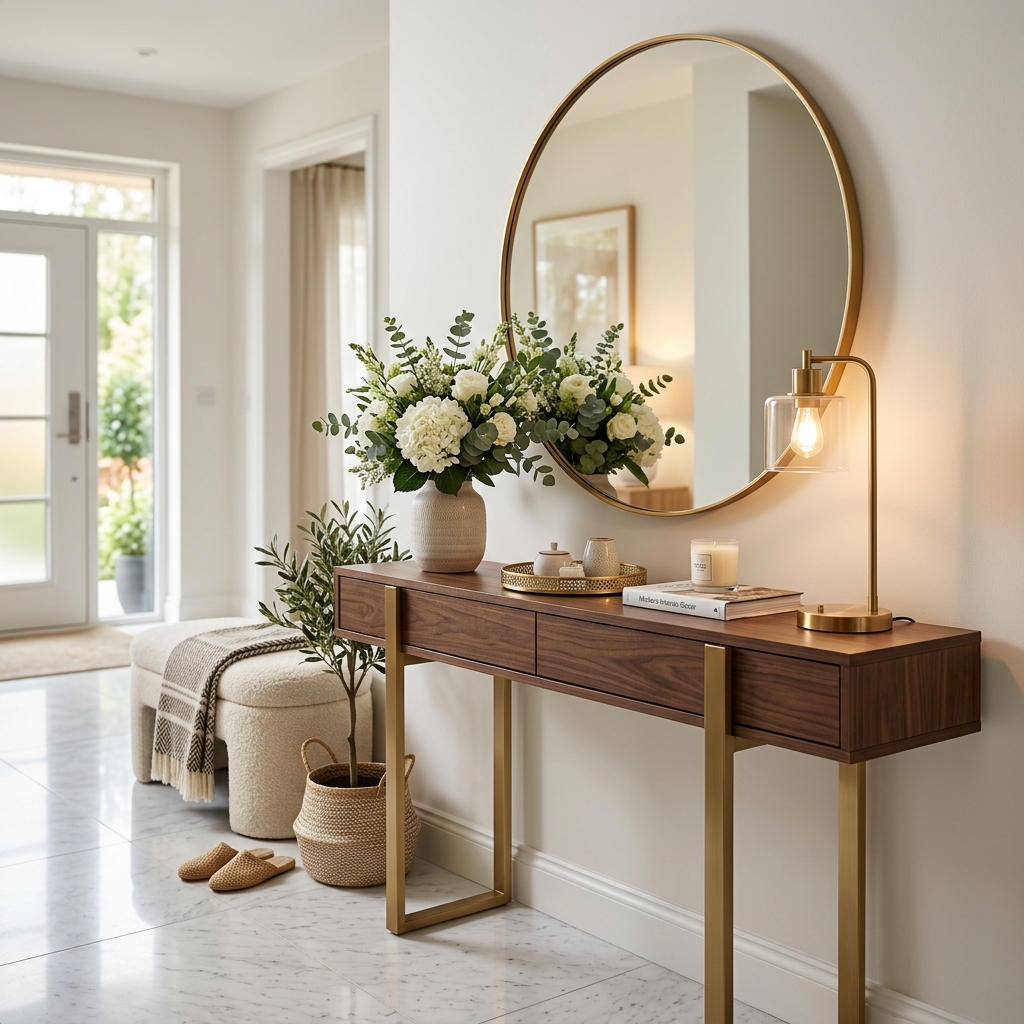
A console without something living feels unfinished. Greenery adds movement, softness, and color that no lamp or book can replicate — it literally breathes life into hard wood, metal, and walls.
You do not need a green thumb or sunny foyer. The right low-light plant, a forgiving vase formula, and smart faux alternatives keep your entryway fresh year-round.
Quick answer: Style consoles with one 24-30 inch greenery anchor — 14-18 inch vase plus stems — paired with a small 6-8 inch potted plant. Use snake plant, pothos, or faux eucalyptus for low light, always with waterproof protection.
Key Takeaways
- One tall vase (24-30 in total) + one small pot (6-8 in) = balanced greenery
- Low-light winners: snake plant, ZZ, pothos, olive and eucalyptus stems
- Vase rule: 1/3 vase, 2/3 stems above rim; mouth 4-6 in wide for easy arranging
- Protect wood with cachepots, saucers, felt pads; empty water within 30 minutes
- Mix fresh seasonal cuts with permanent faux base to save money and effort
Best Plants for Console Tables
Low-Light, Low-Fuss Live Picks
Entryways often have north light or no window. These tolerate it: snake plant (12-18 inch sculptural leaves, water monthly), ZZ plant (glossy, drought-proof), golden pothos (trailing 12-24 inches over table edge), and parlor palm (soft height without drama). Keep pots 6-8 inches diameter so they fit 12-inch deep consoles without crowding.
Light hack: rotate plants to a brighter room for one week per month. Wipe leaves monthly with damp cloth — dusty leaves photosynthesize 20% less and look dull in mirror reflections.
Avoid fiddle-leaf figs and succulents needing direct sun on dark consoles; they drop leaves and signal neglect faster than no plant at all.
Fresh Cuts and Seasonal Stems
Fresh stems give instant height and change with seasons for under $15. Spring: cherry blossom, tulips, ranunculus. Summer: hydrangea, wildflowers, monstera leaf singles. Fall: eucalyptus, dried wheat, amber roses. Winter: pine, cedar, red berries, amaryllis.
Formula: 3-5 stems of one variety beats mixed clutter. Cut at 45 degrees, strip leaves below waterline, change water every 3 days. Use a 16-inch ceramic vase for airy branches, bud vases in trios 6-9 inches for minimalist looks.
Cost saver: one $12 eucalyptus bunch lasts 3-4 weeks dried and still looks intentional long after water is gone.
Vases, Vessels, and Faux Botanicals
Choosing Vases That Work
Scale vase to table: 14-18 inches tall for 48-60 inch consoles, 10-12 inches for tables under 40 inches. Mouth 4-6 inches wide holds branches upright without foam; narrow 2-3 inch mouths suit single stems. Weighted bottoms prevent tipping in high-traffic entries.
Material pairing: clear glass lightens heavy wood consoles; matte ceramic calms glass tables; travertine or terracotta warms modern whites. Repeat vase color once — cream vase + cream books, or black vase + black frame — for cohesion.
Keep two vases in rotation: tall seasonal vase + trio of small bud vases. Swap contents, not vessels, to restyle in minutes.
Faux That Actually Fools
Modern real-touch faux has molded veins, matte coating, and bendable stems. Look for: varied green tones (not single neon), brown realistic stems, and 24-30 inch length with 3-5 branches. Good faux olive, eucalyptus, and orchids cost $18-35 per stem but last years.
Style faux like fresh: cut to varied heights, bend outer branches outward, mix two textures (eucalyptus + grass). Place in opaque ceramic — clear glass exposes fake cut ends. Dust with microfiber weekly; sunlight-faded faux gives away the secret — rotate out of direct south windows.
| Greenery Type | Light Needs | Water | Best Vase |
|---|---|---|---|
| Snake / ZZ in pot | Low, monthly water | 6-in cachepot + saucer | Ceramic 6-8 in |
| Pothos trailing | Low-medium | Weekly | Small pot + hanger edge |
| Fresh eucalyptus | N/A cut stems | Change water 2x/week | 16-in vase, 28 in total |
| Faux olive stems | None | Dust weekly | Opaque 14-18 in vase |
| Seasonal branches | N/A | Dry vase OK | Tall 18-in weighted vase |
Get vessel inspiration from console table decor ideas, layer heights with the console table vignette guide, and light greens warmly with console table lighting.
Caring Without the Stress
Waterproofing and Placement
Wood + water = rings. Always: felt pads under every vessel, waterproof liner inside woven baskets holding pots, saucer 1 inch larger than pot base. Water plants in the sink, drain 30 minutes, then return — never water on the console.
Placement: greenery opposite the lamp balances weight and gets any window spill. Keep leaves 12 inches from linen shades (heat + moisture stain) and 6 inches from art to avoid humidity marks. In narrow 36-inch walkways, choose upright snake plant over trailing pothos that snags sleeves.
Under-table option: large 10-inch fiddle or basket with faux stems grounds tall consoles and keeps the surface clear for keys and trays.
Quarterly Refresh Plan
January-March: pine + white anemone transition to pussy willow and tulips. April-June: cherry stems, peonies, trailing pothos flush. July-September: grasses, monstera singles, drought-proof faux when traveling. October-December: eucalyptus, wheat, cedar and berries.
Photograph each arrangement to repeat winners. Compost spent cuts, store faux in tall wrapping to avoid bent kinks.
Common Mistakes to Avoid
Too many tiny pots. Five 4-inch succulents scatter the eye. Use one tall + one small for clear hierarchy.
Stems swallowing the mirror. 36-inch branches covering 70% of a 28-inch mirror hide your focal point. Trim to overlap max 15% of frame bottom.
Unprotected bottoms. Skipping saucers ruins $200+ consoles for a $12 plant. Every live vessel gets waterproof + felt.
Single-tone plastic faux. Shiny uniform green screams fake. Mix tones, bend branches, pair with real wood and stone.
Forgetting scale in small foyers. Oversized 20-inch palm on 30-inch console blocks walkway and light. Keep total under 30 inches in tight halls.
Conclusion
Greenery is the fastest way to make a console feel alive: one tall vase at 24-30 inches, one small forgiving pot, waterproofed and lit warmly. Choose low-light live plants where you can, realistic faux where you must, and refresh cuts seasonally.
Start with eucalyptus in a 16-inch vase opposite your lamp. Then explore seasonal console decor for holiday stems and console table color schemes to pair greens with palette.
🔥 Today's Best Console Table Deals
Hand-picked discounted picks from AliExpress — prices change often, check the live price.
 -47%
-47% -46%
-46% -37%
-37%