
Affiliate Disclosure: EntrywayConsoleTable is reader-supported. When you buy through links on this site, we may earn a small commission at no extra cost to you.
A quick hallway test: Stand in your entry with a tape measure. Stretch it from the wall to the nearest door swing or stair rail. Subtract 36 inches � that is your max table depth. In a 42-inch hall, that leaves 6 inches. This is why so many of these picks sit at 9.5 to 11.8 inches deep � they were chosen to pass that test, not to fill a showroom.
The best under-stairs console tables are narrow models under 12 inches deep that slip beneath the slope without blocking the walkway. For most homes, the HOOBRO 29.5” Narrow Console ($40-60) is our top pick: 9.5 inches deep with one shelf, short enough to angle into almost any alcove. The Tribesigns 39.4” 4-Tier adds storage where the stairwell gives full headroom.
Quick Recommendations
Here are the under-stairs console tables I recommend — all narrow enough to work with the stair geometry of real sloped alcoves.
| Product | Best for | Depth | Storage | Price |
|---|---|---|---|---|
| HOOBRO 29.5” Narrow Console | Best for tight alcoves | 9.5” | 1 open shelf | $40-60 |
| HOOBRO 29.5” Narrow Console with 2 Fabric Drawers | Best drop zone | 9.4” | 2 fabric drawers + shelf | $55-75 |
| Hoctieon 31.5” 3-Tier Curved Console | Best for curved stair walls | 11.8” | 2 open shelves | $60-90 |
| Tribesigns 39.4” 4-Tier Rustic Console | Best storage | 11.8” | 3 open shelves | $70-110 |
| Tajsoon 41.8” 2-Tier Industrial Console | Best industrial style | 11.5” | 1 open shelf | $50-80 |
Our #1 pick: the HOOBRO 29.5” Narrow Console — at 9.5 inches deep it squeezes into the shallow end of the slope where deeper tables simply won’t fit, and it does it for under $60.
What Makes a Good Under-Stairs Console Table?
A good under-stairs console starts with geometry, not style. The stair slope is a descending ceiling line, so you have to measure the clearance at the lowest point of the alcove before you choose anything else. Depth matters most: keep it under ~12 inches so the table doesn’t push into the traffic lane, and leave 12-18 inches between the tabletop and the stairs above it so decor has breathing room. Staircases of every pitch follow the same rule: the pieces that work are the ones that read light — open metal frames, thin legs, and finishes that reflect the little light a stairwell gets.
- Depth: 8-11 inches fits steep slopes; anything past 12 inches blocks the walkway
- Clearance: keep 12-18 inches between the tabletop and the lowest point of the stairs
- Height: 29.5-31.5 inch tables only fit the high end of the alcove, not the triangle at the base
- Storage: drawers hide keys and mail, or open shelves paired with baskets for shoes and leashes
- Frame: metal X-frames and curved legs keep an enclosed staircase from feeling crushed
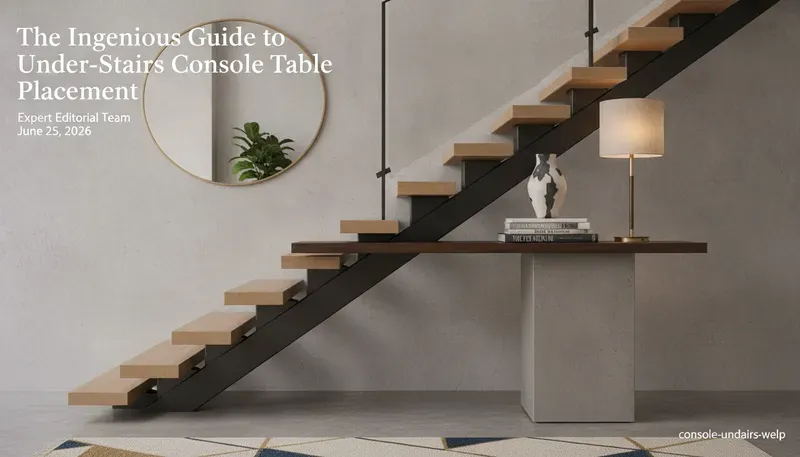
Because the nook is a shadow zone, light colors and mirrors do real work here: a warm 2700-3000K lamp softens the harsh angles of the stringer, and a circular mirror bounces the room’s light into the corner while echoing the diagonal line of the stairs.
Best Under-Stairs Console Tables
1. HOOBRO 29.5” Narrow Console
Full specs: View the detail page for the HOOBRO 29.5” Narrow Console
Best for: Tight under-stair alcoves where every inch of depth counts
Depth: 9.5”
Why we recommend it: At 9.5 inches deep and 29.5 inches tall, this is the easiest table to angle into the shallow end of a staircase without bumping the slope. The single open shelf holds a basket for shoes or leashes while the top carries a tray and a small lamp, and the whole piece weighs little enough that one person can reposition it as your decor changes. It’s our top pick because it fits the widest range of stair geometry at the lowest price. As of Aug 2026, prices are a snapshot and may change over time.
Pros:
- 9.5” depth slides under steep slopes that reject deeper tables
- Lightweight — easy to angle and reposition
- Under $60, the cheapest way to claim the nook
Cons:
- Open shelf shows clutter unless you add a basket
- Small surface — no room for tall decor on the low side
Ideal room: Compact entryways with closed-stringer stairs and a short wall run under the landing.
2. HOOBRO 29.5” Narrow Console with 2 Fabric Drawers
Full specs: View the detail page for the HOOBRO 29.5” Narrow Console with 2 Fabric Drawers
Best for: Under-stair drop zones that need to hide keys, mail, and leashes
Depth: 9.4”
Why we recommend it: The two fabric drawers turn a slope-side nook into a command center without adding depth — at 9.4 inches this is the narrowest drawer option in this roundup. Position it toward the high side of the alcove and the drawers pull out clear of the descending ceiling line. The open shelf below takes a basket for bulkier items, and at $55-75 it delivers the best storage per inch under a stringer. As of Aug 2026, prices are a snapshot and may change over time.
Pros:
- Two drawers hide daily clutter out of sight
- 9.4” depth fits where the slope is steepest
- Drawers sit below the stringer line at 29.5” height
Cons:
- Fabric drawers need spot cleaning, not machine washing
- Open back means the table must sit flush against the wall
Ideal room: Mudroom-adjacent stairwells where the stairs meet the front door.
3. Hoctieon 31.5” 3-Tier Console with Curved Metal Frame
Full specs: View the detail page for the Hoctieon 31.5” 3-Tier Console with Curved Metal Frame
Best for: Curved or angled stair walls where a straight-edged table looks out of place
Depth: 11.8”
Why we recommend it: The curved metal frame echoes the diagonal line of the stair stringer instead of fighting it, which visually threads the table into the slope. At 31.5 inches tall and 11.8 inches deep it’s the tallest pick here, so place it where the staircase gives the most headroom. Two shelves plus the top give three tiers of storage in a footprint short enough for a 31.5-inch nook. As of Aug 2026, prices are a snapshot and may change over time.
Pros:
- Curved frame harmonizes with stair geometry
- Three tiers of display in a compact footprint
- Metal frame wipes clean and shrugs off stairwell dust
Cons:
- 11.8” depth needs the wide end of the alcove
- 31.5” height won’t fit under low-slope sections
Ideal room: Modern stairwells with curved or open-tread floating stairs.
4. Tribesigns 39.4” 4-Tier Rustic Console
Full specs: View the detail page for the Tribesigns 39.4” 4-Tier Rustic Console
Best for: Grand under-stair spaces that can take real storage
Depth: 11.8”
Why we recommend it: Four tiers — the top plus three open shelves — turn a tall stairwell nook into a storage wall for baskets, books, and folded throws. At 31.5 inches tall and 39.4 inches wide it belongs in the deep end of an alcove under a staircase landing, where the ceiling clears easily. The rustic wood finish pairs naturally with oak stairs and warm lighting. As of Aug 2026, prices are a snapshot and may change over time.
Pros:
- Four tiers of storage in one footprint
- Rustic wood tone blends with wood staircases
- Solid frame handles heavy basket loads
Cons:
- Deepest option here — measure the slope twice before buying
- Multi-tier look can feel busy in a dark nook
Ideal room: Wide foyers under staircase landings with full headroom.
5. Tajsoon 41.8” 2-Tier Industrial Console
Full specs: View the detail page for the Tajsoon 41.8” 2-Tier Industrial Console
Best for: Industrial stairwells where a dark X-frame reads as architecture
Depth: 11.5”
Why we recommend it: The X-frame gives this table visual airiness — exactly what a heavy, enclosed staircase needs — while the black finish disappears against dark walls for a moody, monochromatic look. At 41.8 inches it’s the longest pick, so it suits straight runs of wall beside the stairs rather than the triangle at the base. The 11.5-inch depth sits right at the 12-inch limit, so check your walkway clearance before committing. As of Aug 2026, prices are a snapshot and may change over time.
Pros:
- X-frame keeps the nook feeling open and light
- Black industrial finish hides dust and scuffs
- 41.8” length fills long under-stair walls
Cons:
- 11.5” depth is tight against the walkway rule
- Open two-tier design needs baskets to stay tidy
Ideal room: Loft-style and industrial homes with dark steel staircases.
How We Evaluate These Tables (Spec-Based, No Hands-On Claims)
We don’t claim hands-on lab tests. Every recommendation here comes from the published specs, the published dimensions and weight ratings, construction notes, and verified customer feedback patterns as of Aug 2026. Prices are ranges � check the listing for today’s price. For the full process, see our editorial policy � specs, materials, verified feedback, no paid placements.
Buying Considerations
Depth
Depth decides whether your hall still feels like a hall. In a 36-inch hall, even a 12-inch table steals a third of the walkway � that is why narrow halls start at 9.5 inches. In a 48-inch hall you can afford 11.8 inches and gain a shelf without crowding. Always center heavy decor over the legs, not the front edge.
Keep depth under ~12 inches — 8-11 inches is ideal for under-stair nooks. A 9.4-9.5 inch table like the HOOBRO pair lets you push into the shallow end of the slope, while 11.8-inch models must sit in the wide part of the alcove where they won’t block the path. Measure from the table’s front edge to the opposite wall: you need at least 30 inches of passable space, and 36 inches if it’s a main traffic lane.
Width
Width is about proportion, not just fit. A 63-inch table on a 90-inch wall looks intentional; the same table on a 70-inch wall overwhelms. For behind-sofa use, subtract 8 to 12 inches from the sofa width per side.
Match the table to the wall run, not the full stair span. Under-stair walls are usually shorter than standard entry walls: 29.5-inch tables suit single alcoves, while 39.4-41.8-inch tables suit straight runs beside the stairs. Leave a few inches of wall visible on each side so the piece looks intentional rather than wedged in.
Height
Height sets eye level. At 29.5 to 31.5 inches, lamp shades and the mirror bottom sit where you naturally look when you walk in. Taller 34-inch models help if you store shoes underneath, but they raise the center of gravity � anchor them.
Standard consoles are 29.5-31.5 inches tall, but the slope dictates what actually fits. Position the table where there are 12-18 inches between the tabletop and the lowest point of the stairs above — that leaves room for decor and prevents the crammed look. Short 29.5-inch models can sit deeper into the slope; 31.5-inch models need the high end of the alcove.
Storage
Storage is where clutter lives or dies. One shelf handles a tray and a basket. Two shelves or two drawers hide daily keys and mail. Three drawers swallow a family weekly drop. Open shelves display; drawers hide.
Under the stairs, drawers beat open shelves for hiding daily clutter — keys, mail, and sunglasses vanish instantly. If you prefer open shelves, pair them with baskets for shoes and leashes. Multi-tier tables like the Tribesigns 4-tier work best under landings where headroom is full, and they give you display levels that follow the slope as decor steps down.
Materials
Materials set lifespan. Solid wood carries 150 to 200 pounds and can be refinished; MDF with water-resistant coating handles 40 to 75 pounds and wipes clean; steel frames handle 250+ pounds but need good welds.
Metal frames are the best under-stair choice: they read lighter than blocky wood, resist the dust stairwells collect, and wipe clean in seconds. Wood-grain engineered wood tops add warmth that pairs with oak stairs and survive the occasional bumped knee, while solid wood legs add durability where it counts. Avoid glossy finishes, which show every smudge in the low light.
Stability
Stability is hardware deep. Leveling feet fix uneven floors. X-braces and lower-shelf rails resist racking. Cam-locks loosen over time � retighten or add L-brackets. Anchor into a stud, not drywall.
Under-stair nooks often sit on uneven floors near door thresholds. Look for leveling feet and X-bracing or reinforced frames, and check that the table sits level before you load it. In homes with kids or pets, anchor the table to the wall — the nook is exactly where a climbing child will find it.
Style
Style should echo the room, not fight it. Match finishes you already have � wood tones, black, white � then let decor repeat two or three colors. Symmetry reads formal; asymmetry reads modern.
Treat the console as part of the architecture. A leggy, open frame like the Tajsoon X-frame keeps a closed staircase from feeling crushed, while a curved frame echoes the stringer for a built-in look. Light finishes reflect what little light reaches the nook and make it feel larger; dark finishes work if you want the moody monochromatic “jewel box” effect.
FAQ
Can I place a console table under a staircase if I have floating stairs?
Absolutely — it’s one of the best places to anchor the visual weight. Choose a low-profile table that mirrors the horizontal lines of the treads, like the Hoctieon curved frame, and skip tall lamps that could poke through the gaps. Style objects that look good from above, because people climbing the stairs will look down onto the surface.
How much clearance do I need between the console and the stairs?
Aim for 12-18 inches between the tabletop and the lowest point of the stairs directly above. Less than that reads as crammed and leaves no room for lamps or vases; more than that is fine but starts to waste the vertical space you’re trying to claim.
What if my under-stair space is very narrow?
Choose the narrowest tables available — the HOOBRO consoles at 9.4-9.5 inches deep fit slopes that reject anything deeper. Slide the table toward the high end of the alcove where the slope clears it, and keep the styling to a single tray and a small vase.
How do I handle cords for lamps under the stairs?
If there’s no floor outlet, use rechargeable cordless lamps. Otherwise run cords along the baseboard inside paintable raceways so they disappear against the trim. Stairwells are dark, so stick with warm 2700-3000K bulbs, which flatter wood finishes and soften the stairs’ harsh angles.
Is it okay to put a TV on a console table under the stairs?
Yes, it’s a popular small-space hack, but check that the spandrel gives enough height for the screen and a comfortable viewing angle. It’s often better to wall-mount the TV and use a shallow console like the HOOBRO or Tajsoon for the media components.
How tall should the decor be on an under-stairs console?
Follow the staircase slope: start with the tallest item — a lamp or tall vase — at the high end of the table, then step down to a tray or stack of books at the low end. Keep the tallest piece at least 12-18 inches below the lowest point of the stairs above.
Should I put a rug under the console table?
A small runner or sheepskin can define the space, but make sure it doesn’t create a tripping hazard at the foot of the stairs. Often the table looks cleaner standing directly on the hardwood or tile, especially when it sits in a traffic path.
How do I measure my space before I buy?
Measure the wall length, then multiply by 0.66 � that is your ideal table length (the two-thirds rule). For depth, do the hallway math: hallway width minus 36 inches of walkway = max depth. For height, 29.5 to 31.5 inches clears most door handles and lines up with mirror eye level. Write those three numbers down and compare them to the spec box above.
Will this table wobble on my floors?
Look for leveling feet and a braced frame � X-brace or lower-shelf rail. Even then, anchor any table over 30 inches tall into a wall stud, especially with kids or pets. A 5-pound lateral push that moves the top more than a quarter inch is a sign to re-tighten hardware or add L-brackets.
Final Recommendation
For most homes, the HOOBRO 29.5” Narrow Console is the safest under-stairs buy: 9.5 inches deep, under $60, and short enough to angle into almost any slope. If your stairs meet the front door, step up to the HOOBRO with 2 fabric drawers — at 9.4 inches deep, it’s the best storage per inch under a stringer.
Related Guides
- Small Entryway Console Ideas — Tight-space solutions and depth math
- Modern Console Table Guide — Clean lines for floating and modern stairs
- Solid vs. Engineered Wood Console — Material durability compared
🔥 Today's Best Console Table Deals
Hand-picked discounted picks from AliExpress — prices change often, check the live price.
 -46%
-46% -37%
-37% -47%
-47%